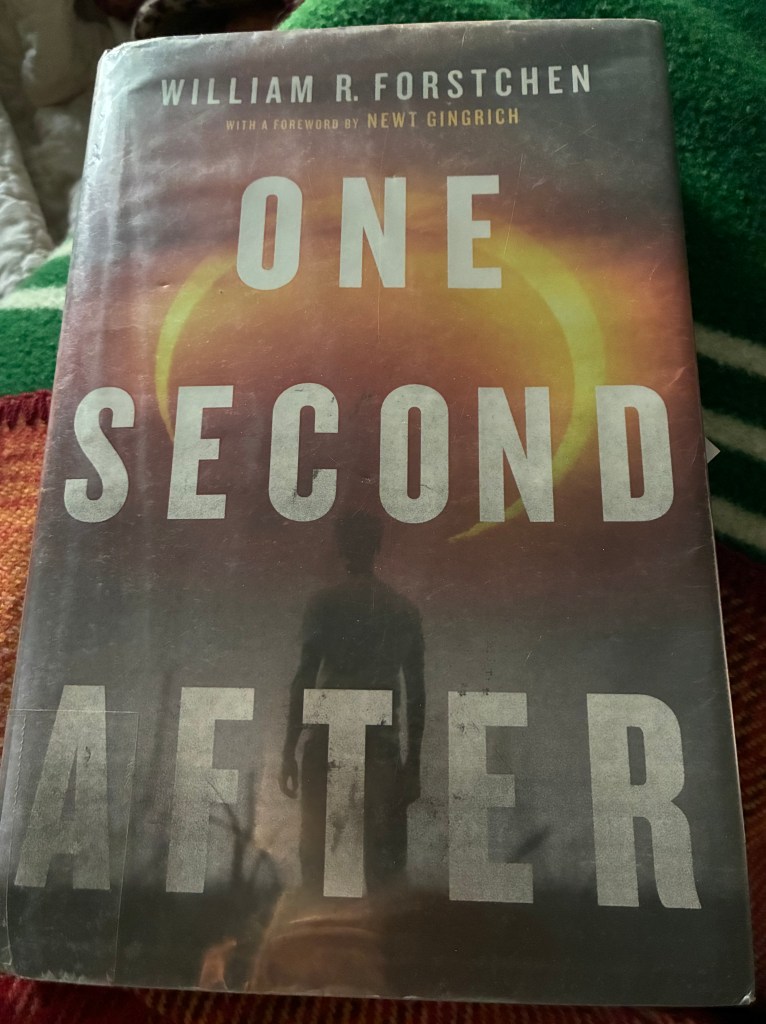
In One Second After, by William R. Forstchen, a man seeks to save his family and town after an EMP sends the country back into the dark ages.
Who Recommended this book: My friend Jenny, who is not only part of my writing group, but shares many of my nerdy interests. She makes excellent nachos. She has a side hustle selling spice mixes which you can find here:
This book also comes highly recommended by CERT members, so I’ve had it on my radar for awhile but not gotten around to reading it until now.
What did I think about the writing?
One Second After is a plot based novel—meaning that the characters are there to showcase the plot. In this case that means there aren’t character flaws to be overcome or intense interpersonal relationships. Stuff happens and we see it by how the characters interact with the action.
Do I enjoy reading these kinds of characters? Not really. They feel as if they are written for a purpose rather than discovered. A character might react to something or have an opinion because that opinion is needed to showcase what opinions in the situation would be, rather than because the character’s backstory, flaws, and current situation lend itself to those feelings.
The book was largely split between horrific results of a disaster that knocks out any computerized technology, and meetings about those events.
The descriptions of the events: running out of food and medication, how to deal with martial law, defending the town from hordes of baddies, etc. were generally beautifully written with evocative details. The meeting scenes seemed to largely be setting up what was going to happen off page, and allow for lots of exposition.
This book is filled with exposition. The exposition that works is centered around the events of plot. The exposition that grows tired quickly is about how they are worried about losing what makes them American. The central character is a retired military colonel who is a military historian/prof at a Christian college, but even so the “Murica” is laid on pretty thick and drags down the plot.
What did I think of the message?
As a CERT member and someone fairly prepared for events such as this, I appreciate the (mostly) realistic depiction of the preparedness level of much of the US for an EMP. If this book gets more people storing up six weeks of food for their families and keeping a solar generator around, then life is easier for me and my squad.
There is a second message that permeates this book: That America is a dignified place where we come together in the face of adversity and help our neighbors. Also pray a lot. While I don’t disagree that most communities I’ve lived in do function that way, it doesn’t have anything to do with the fact that most of them were in America. That is how communities function.
Overall, the pre-covid assumptions about how people respond to national crisis held up with mixed results.
To whom would I recommend this book?
I would tacitly recommend this book to most people. It certainly has plenty of food for thought. I would then recommend that they go to Ready.org to get some ideas for how they might prepare their own homes and families for crisis events.
For my preparedness friends out there, the messaging is going to feel like preaching to the choir.
Writing Prompt: Disaster strikes! (Your choice) write progressive vignettes : Just after, 1 day, 5 days, 1 month…
 Mamasquatch the Writer
Leave a comment