Let me overthink this through…
I’ve never met an idea I couldn’t overthink. Thank my glorious neuro-spicy brain, generational anxiety, or the well developed imagination that keeps me churning out thoughts day and night. Welcome to a peek inside my head.
Overthinkings from the Parking lot: Genres and More
“What’s your novel about?” Is one of the first questions we as writers have to answer. And yet it can be such a loaded question. Are they asking about the plot? The character arcs? The big themes? How do we answer that question and the other big ones that come up?
I recently sat into a kids writing workshop my daughter was attending and the author had them create High Concept Ideas…not to too much success, but the idea is good. Be able to explain your novel in a sentence or two.
After a book falls on her head in the local library, Saide discovers she can speak to dead authors. When she stumbles upon Edgar Allen Poe’s ghost, will she have the guts to write down his last novel?
When the local dragon hunter goes missing, his apprentice must hold down the fort, or die trying.
You get the idea. Somebody has a goal, there are stakes, etc. High concept ideas may be helpful to some folks—the presenting author claimed she generated them to help with writers block—but I tend to think of them as something that happens at the end of the process. Rarely do my original concepts last much longer than the first draft of a novel. Short stories maybe.
Still, after you have a solid draft of your story, picking out the high concept idea will certainly answer the first layer of “What is your novel about?” But what if they are asking about the themes? Most of my books boil down to explorations of community and an individual’s part in the whole. Belonging is a primitive human desire and I love exploring the dynamics between characters and the greater world. “Community.” Is my answer to the big question whenever I don’t feel like going deeper.
“What genre is it?” Is usually the second frequent question I get.
Genres can feel simple at first. Historical fiction, romance, western, mystery. But like any label, once you start putting things in boxes, more boxes appear. Some common tags you might need to add:
Speculative: Is there magic? Anachronisms (things that wouldn’t be historically accurate—think steampunk or cyber trains)? Alternate histories? Anything that tweaks the “real world” a bit falls under this category, but not enough to be Sci-fi or Fantasy. Twilight would be speculative fiction because aside from vampires the world systems remain the same. Harry Potter is fantasy because the entire world system is based on magic. The line is blurry.
Urban: Urban fiction, urban fantasy, urban horror…urban plops the setting down in a familiar city. London, Chicago, New York, etc. The city is almost a character in itself.
Contemporary: Modern day
Historical: Not modern-day
Dark: leaning toward horror, or thematically grittier topics or themes.
Cozy: The opposite of dark, lower stakes and less brutal themes. We don’t see anyone spurting blood at the crime scenes.
Psychological: These are usually character driven stories where the protagonist is at conflict with themselves or others internally.
Mysteries are usually classified by the location of the setting. Quilt shop mysteries take place in quilt shops (this is a stunningly large sub-genre), medical mysteries, Police mysteries, etc.
Romance gets the same sort of treatment but then sometimes it is paired with a second genre on equal footing. Without wasting too much of my life researching the line, I’m guessing it has to do with how much of the plot revolves around with element of the story. In a romantic thriller, I would expect the romance and the thrill to be equal, while in a thriller where the protagonist has a love interest I would expect more of a traditional A plot, B plot set up.
There are sub-sub genres as well. My current project is a portal novel, meaning that it has a portal between worlds. It is contemporary fantasy—as more than half the novel takes place in an alternate world—and may be a novel in stories if I can make it work, otherwise a braided narrative.
The last sentence there lays out the form of the novel. Most people don’t ask about the form of a story. Many people may not know that there are different forms of novels. Yet if you think about books you enjoy, they aren’t written in the exact same way.
Chronologically: Told in the order that the events happen. Maybe with flashbacks. Most books are this.
Hero Cycle: I wrote a couple of articles on this, but essentially a plucky protagonist passes from the known to the unknown and back in a fairly formulaic manner.
Louise Erdrich writes novels in stories—books with chapters from different perspectives that in the end tell a whole story. It may take place in different timelines, and the chapters can almost be picked up and moved around without losing the plot integrity.
Braided narratives are similar: possible different timelines, different perspectives, but there is a plot direction that requires the story to be read in order.
Stream of Consciousness: Don’t do it. Just spare us.
Post Modern: These books ramble. It was a thing in the sixties. Post structuralism or anti structuralism for the sake of snobbery.
Vignettes: short moments that together make a story.
Novel in Poems: Prose or rhyme, together they create the story.
Modular: Two sides or chunks that can be read in a variety of ways, but not quite a novel in stories.
Epistolary: Told in letters or diary entries.
There are more forms than this—and combinations, and variations— but these are the ones I run into the most. Hopefully, the next time someone ask you “what sort of novel is it?” You can reply, “ a speculative historical fiction braided novel about community.” Or whatever applies to your own.
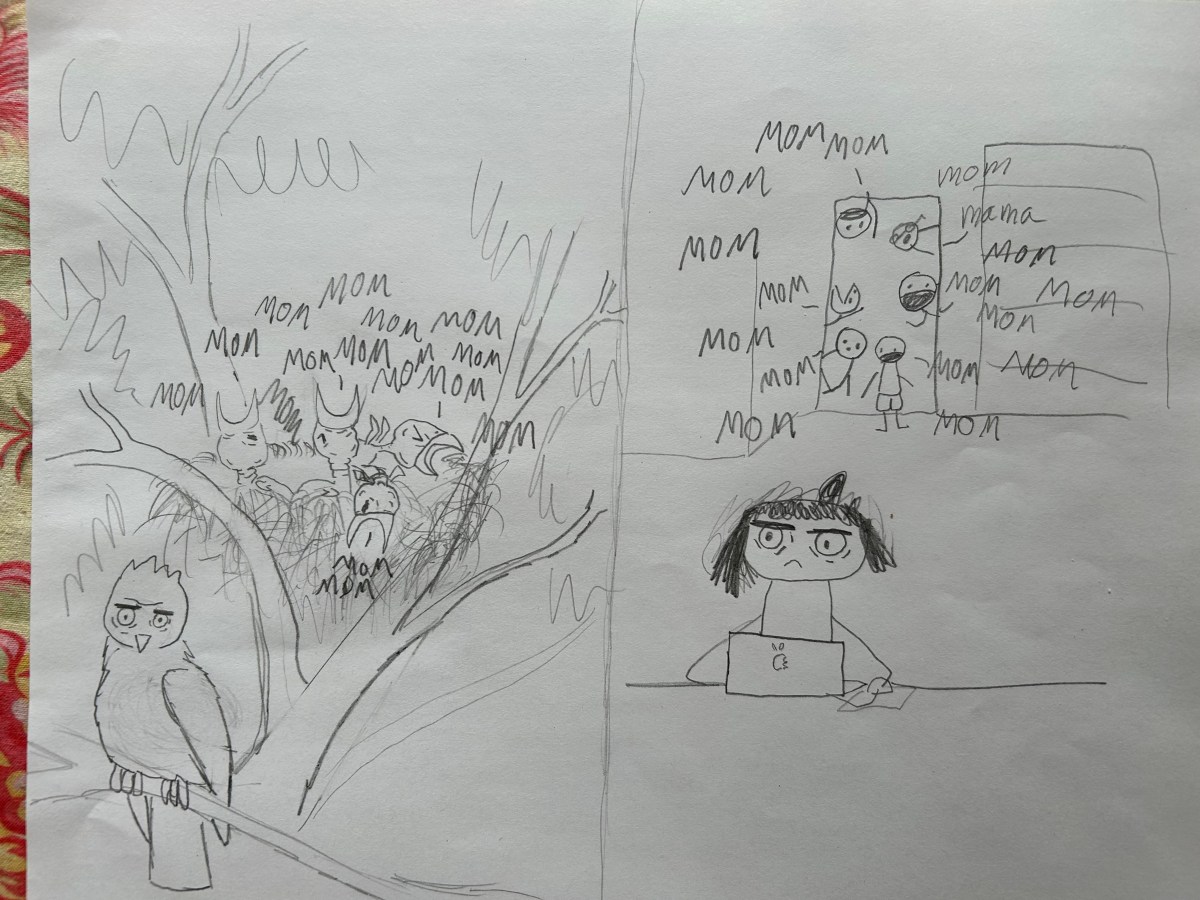
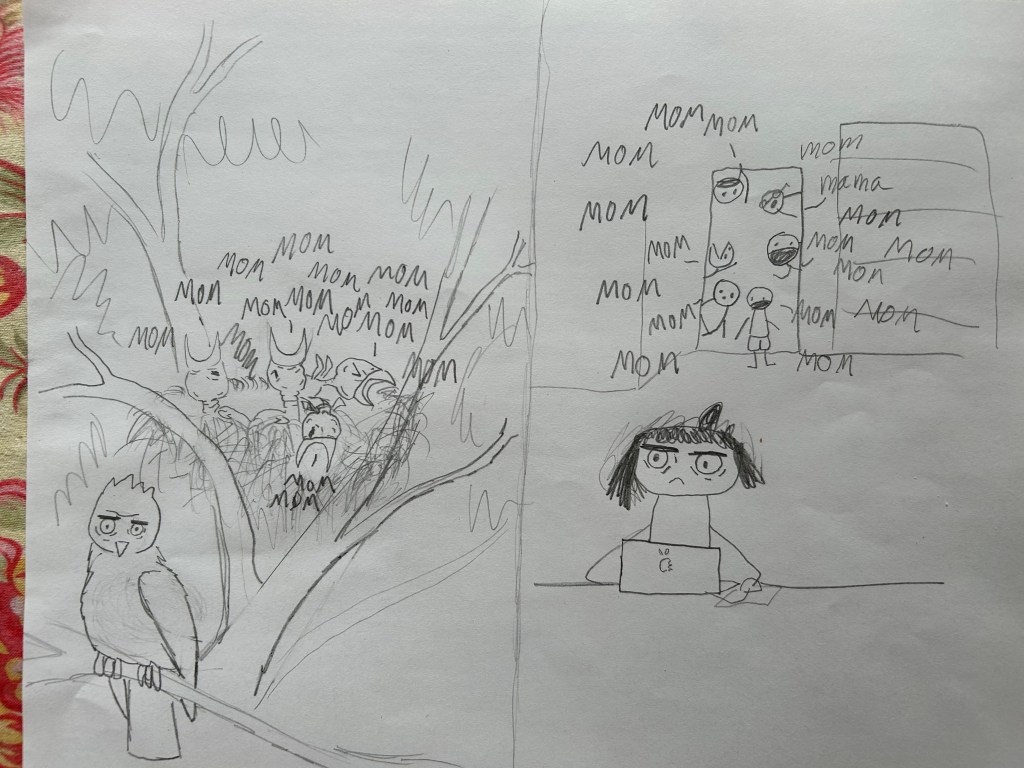
Happy Writing this week folks! I’m still getting into the swing of things with kids in school, activities, and my own commitments but I’ll try to keep up the same twice a week schedule for my loyal readers (looking at you Mom and Pepper!)
Back to Work!
Welcome back friends! It has been a long summer. I read 25 books, mostly recommended by my friends. Wrote when I could—though it was a lot less than I expected!—and created a lot of artsy stuff. The kids have been back at school for two days now and I hardly know what to do with myself!
My ADHD brain works really well with structure. This summer? Not so much. I spent a lot of time staring at things. I wouldn’t call it writer’s block—I had plenty of ideas—but a lack of energy to get things on the page. Constant interruptions didn’t help. With historical fiction I can always switch to research, but with my current project not so much.
Being aware helps. Knowing that my brain doesn’t feel well overstimulated and recognizing the signs helps. Being kind to myself helps. But so does getting the beloved distractions back to school.
My goals for September include getting into a regular writing schedule. I’m solidly halfway through my current first draft with a hard (if sparse) outline for the rest and I’d really like to have a draft in the can by the time my residency rolls around in October. (I’ll be heading back down to Shelton for two weeks of intensive editing of book 3 in my series).
I will be teaching two classes this fall. Middle School Storybuilding, and a LARPing great battles of History for 2nd-5th graders. The last was a toss in at the last second but I’m pretty pumped for it. I’m sure there is a joke about swords and pens in there somewhere.
And of course we’ll be back to weekly Craft articles here on the blog. This month I’m going to talk a little about different genres and forms of novels and what it looks like to write those. After that? We’ll see…
I hope you all had a lovely summer and are pulling out those sweaters and giant coffee mugs. Happy Writing this week folks!
Overthinkings: Flooding the Plot with Chekov
The first time I watched Bullet Train I was blown away, not so much by the plot—it’s fine—but by the imagery. Every scene is filled with oddities that individually are so distinct that they must have meaning to the plot, right? Some do. The wild part is that many are just there to be red herrings or background art.
It reminds me of when the rapper Eminem marched hundreds of bleached blond doppelgängers into an auditorium while singing The Real Slim Shady. There were so many possibilities, where was he going to pop up?
I am calling this technique Flooding the Plot with Chekov. (Remember his gun rule?) Recently I watched the tv show, Daybreak, and they used the same level of imagery to muddle the predictability. While the show was far from narratively perfect, episode after episode I was pleasantly surprised by connections that had been set up and disguised very successfully.
All this is well and good for visual mediums, but can we as narrative authors pull off this level of Flooding?
I don’t know.
On paper we are limited to words and descriptions. When someone writes As Alice wandered by the pond a yellow goldfish glinted in the sunlight that danced over the surface of the water. There is a good chance that goldfish is important, especially if a few chapters later we see it again. “Oh no,” Alice cried to the yellow goldfish. “If only Gerald hadn’t been drowned!”
Generally, something should show up three times if it is important to the plot: once to set existence, another to remind the readers that it exists, and then at the climactic moment. The yellow goldfish smiled to himself and released a few bubbles toward the surface. Alice stared, mesmerized, and began lowering herself into the pond, soon to be another of his victims.
Ideally there are other suspects, or plausible reasons for the spate of drownings that we have seeded as well, but in the end the reader should throw up their hands and realize, Of course it was the psychotic goldfish!
The problem with Flooding on paper is that good Flooding is done in the background; on paper, there isn’t a lot of background. Setting descriptions get bogged down by excessive details, and dialogue can feel convoluted and bulky if it strays off topic.
“Oh Ferdinand, your eyes are like chocolate chips in a melting cookie. It’s so special that you remembered my birthday today, especially as that very distracting parade is going by with a man in a bunny suit. Your lips are so soft Ferdi; are you using a new variety of chapstick?”
Given the right character—especially one who is scatter brained or distractible—this kind of dialogue could work?
“Yeah, of course I can come along to the party. Wow, look over there at the guy in the bunny suit, you don’t see that every day. Get me a blue raspberry slushy on your way over would you? And a couple corndogs? Oh did I tell you my sister got out of prison yesterday? I sure hate her boyfriend, yeah, he’s planning on moving in to the garage…”
Another tactic is to give the character a very active internal dialogue.
“Sure,” I agree, my mind racing with thoughts of anything but the upcoming party. Dear gods! Why are Ferdinand’s lips so slimy? Is that a disease? Has he been eating blue raspberry slushies or is he hypothermic? Huh, is that a man in a bunny suit? I guess Easter is coming up.
The biggest hiccup with Flooding is that the human brain likes patterns. We know as readers that if something feels specific on the page that it is likely to be important at some point. So if you mention something over and over and then in the end it isn’t relevant to the plot, it makes the story feel unfinished, or like there are bits of plot dangling around like slobber off a bulldog.
So will Flooding work on the page? I still don’t know, but I hope you’ll give it a try this week. Write a scene with lots of specific details then skip ahead in the story and write the climactic scene. See how you feel about it. Happy Writing!
6 hours later…Well. I just finished my first book for my Friend Recommendation Summer Reading Series and was it ever timely! Dungeon Crawler Carl by Matt Dinniman. It is about a guy and his ex-girlfriend’s cat as they make their way through the first part of a D and D style dungeon as part of an intergalactic reality tv show. This book masterfully Floods the plot with so many potentially important items and characters—and utilizes them in interesting ways—that I read the book cover to cover and was delightfully surprised time and time again.
Evidently the answer is yes.
Look for my review on Dungeon Crawler Carl next week!
Something went wrong. Please refresh the page and/or try again.
 Mamasquatch the Writer