
In my workshops I always tell people that characters’ flaws should be rooted in backstory. There is a scientific reason for this. Childhood experiences shape a person down to a cellular level. Adverse Childhood Experiences can cause life long physical and emotional health issues.
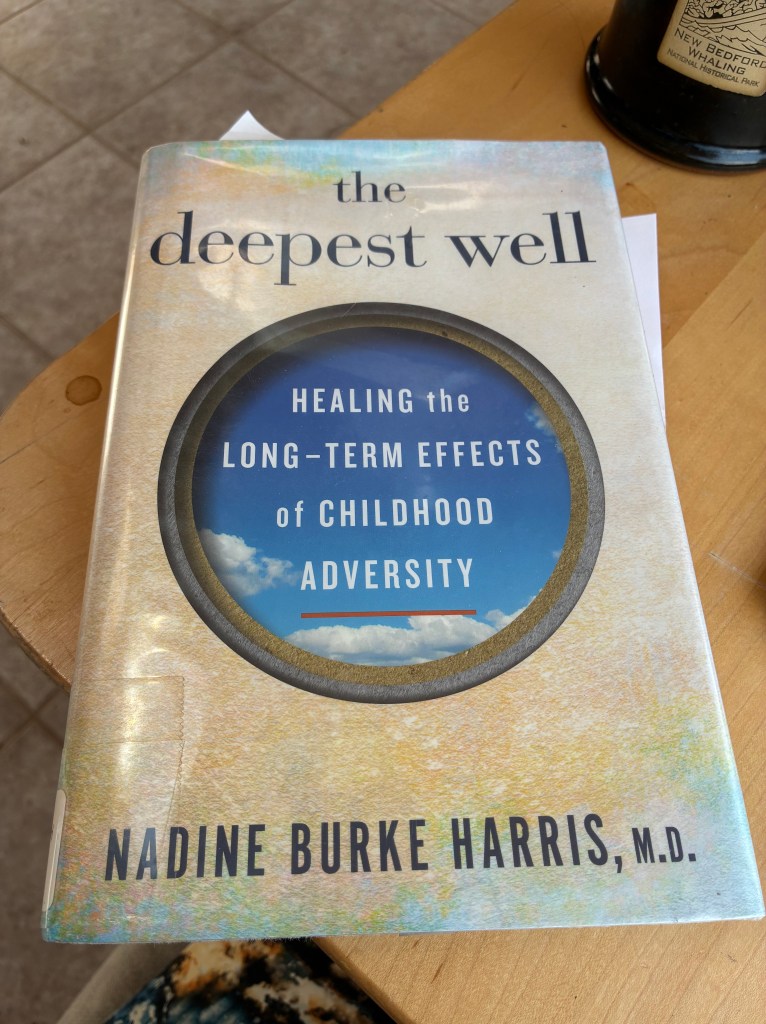
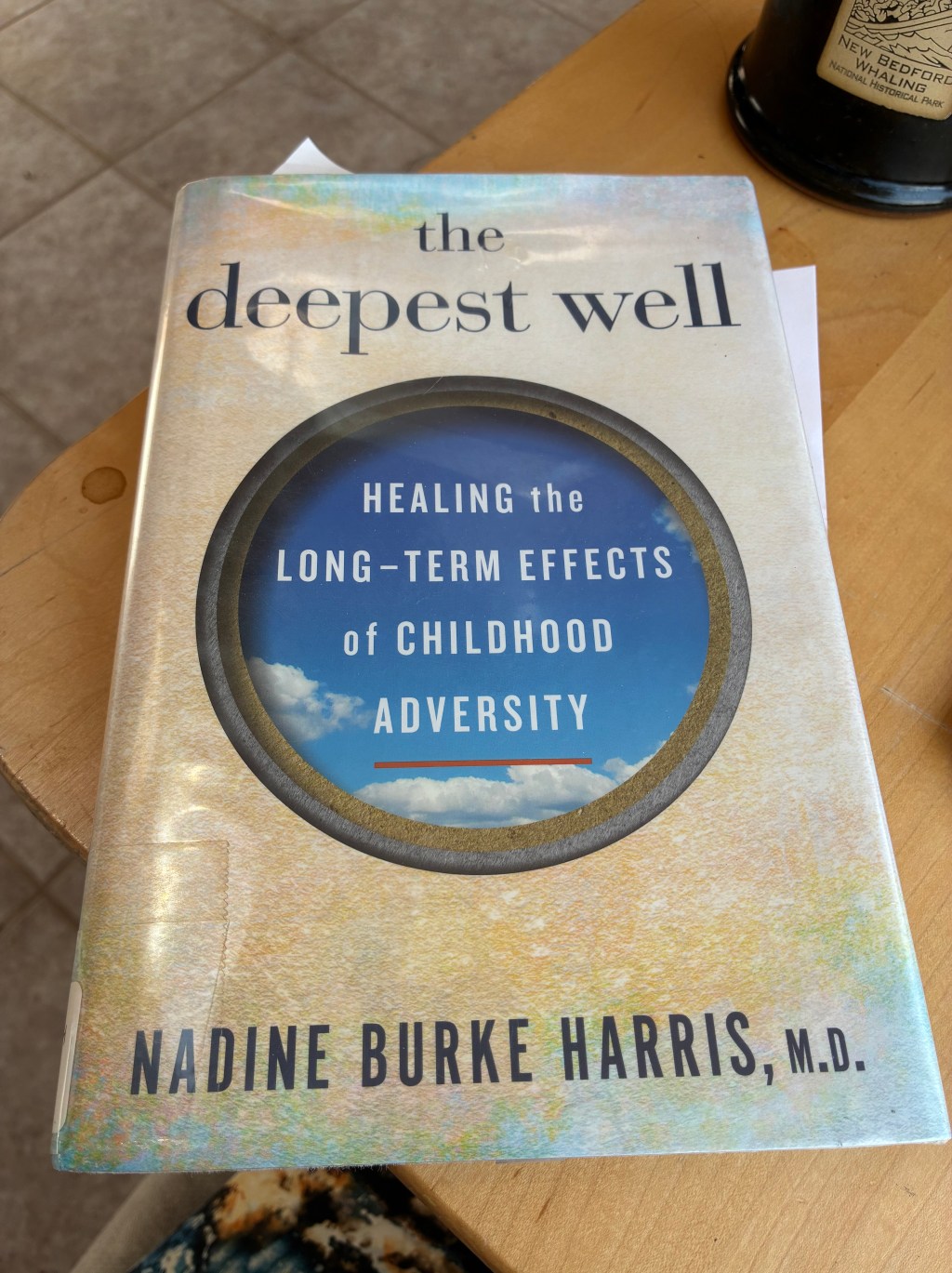
In her book the deepest well: Healing the Long-Term Effects of Childhood Adversity, Nadine Burke Harris, M.D. lays out her research on the topic of ACEs, and how to heal from them. Now, if you are writing a character with a flaw stemming from childhood trauma you don’t want them totally healed—there wouldn’t be much of a story in that—but knowing where the trauma stems from and how to fix it over the character’s arc is a handy tool to have in your writing belt.
So what are ACEs?
Adverse Childhood Experiences don’t fit neatly on a list, but some of the common ones are
- Experiencing violence, abuse, or neglect.
- Witnessing violence in the home or community.
- Having a family member attempt or die by suicide
- substance use problems in the home
- Mental Health problems in the home
- Instability due to parental situation
- Instability to household members being in jail
I pulled this list off the CDC website ( https://www.cdc.gov/aces/about/index.html ) and they go into far more detail about ACEs than I will—from a medical perspective.
While experiencing a single ACE isn’t a guarantee to turn someone into a career criminal, an accumulation of traumas puts the child at risk for mental and physical issues later in life; higher risks of continued victimization in relationships; and significantly higher risks of illegal behavior resulting in legal interventions. Essentially, ACEs are a determinant of future bad behavior: not all traumatized people become criminals, but all criminals are traumatized people.
And what do we do with ACEs now that we know what they are?
First and foremost, write them into your characters. Not all antagonists need to be orphans or have belt marks on their backs, but something caused them to make their choices.
One of my favorite antagonists in my own writing is based off the historical figure Ann Toft. Ann happens to be my 10th great grandmother and was the first female business mogul in the American colonies, way back in the 1670’s. She came over as an indentured servant, struck up with a married scoundrel who build her a plantation, gave her three illegitimate daughters, and helped her become the second largest landholder in Virginia colony at the time.
Ann owned her own ships as well as another plantation in Jamaica. She was a slave holder, but gained most of her land through headrights—or the importation of more indentured servants—who she then made work for her (even extending the service of those who got pregnant). Soon after her much older paramour died she quickly married a merchant, had a son, and then is dead in her early 40’s.
When turning Ann into a character in my books it was easy enough to pick out some ACEs in which to root her flaws.
- By 15 she had left her home in England and come to the colonies, presumably alone.
- By 17 she is the mistress of a wealthy and important man several decades older.
Well off people don’t become indentured servants. In the mid to late seventeenth century a term of indentured servitude was generally seven years, and then you left with some cash and a set of clothes on your back. Seven years paid your way across the ocean. Now Ann was often referred to as “the most beautiful woman in the colonies” which likely didn’t make her life easier before she fell under the protection of Edmund Scarborough.
There are few historical records of the details of Ann’s life outside of several court proceedings and ownership documents, largely because most historians didn’t know what to do with the concept of a rich, independent, mistress of one of the founders of Virginia. It wasn’t until the last forty years or so that anyone credits her as Scarborough’s mistress at all, even though they shared three daughters with his last name, and he built Gargotha—her Virginia plantation—then gifted it to her.
So at fifteen (as closely as I can figure) Ann is either court ordered or voluntarily transported to the colonies, and within two years is pregnant and living the high life—sort of. Her benefactor was a violent and volatile man to those around him, who ignored any sense of propriety at the time, AND regularly got into legal trouble with ultimately no consequences because his brother was aid to the King back in England.
This tells us something else about Ann: she was a survivor. Not only that, she managed to thrive—off the backs of others—in an almost impossible situation. This isn’t uncommon with people who have experienced ACEs. They learn to observe and pivot. They read people.
In my books, Ann is charismatic and makes everyone feel special; she is an astute business woman who uses her money to invest far into the future; she marries as it is convenient to further her plans. Ann also has a fear of losing her beauty because it is the one thing she feels that keeps her safe. Security is her ultimate desire because a lack of financial and familial support led to her first trauma.
All of this makes Ann a very easy character to write. Her moral compass, her decisions, her “line” all stem from the question long term, will this contribute to my security? She backstabs, wheels and deals, and builds bridges as rapidly as she burns them but because her actions are rooted in a constant there isn’t that chaotic feeling that can sometimes appear in antagonists’ story lines.
May is mystery month, and every mystery needs to have a perp. Try creating that character with some easily pinpointed ACEs. They may or may not show up on the page—it depends on how sympathetic you want your audience to feel for the antagonist—but you knowing will create a nice round foe for your detective.
Happy Writing this week! Check out Nadine Burke Harris for some great info on ACEs and how to heal. And thank you to Pepper for the book recommendation! And finally, a picture of Moss at his violin recital.
 Mamasquatch the Writer
Leave a comment