I’ve been making a point to read more the past couple months. “Good writers are good readers” is a popular saying among writing teachers and it holds water. Topping my reading stack are a pile of mysteries that I’ve picked up here or there then forgotten on the shelves of my library. Last night I read The Last Harvest, a book by Kim Liggett. It was okay.
From a Put Words On Paper standpoint, Harvest does the job. It has pleasant dialogue, great setting descriptions, and nothing overtly obnoxious like repetitive word usage. The book is supposed to be a supernatural horror novel based on the author’s experience with the Satanic panic of the 80’s, but it felt more like a predictable plod through an Oklahoma wheat field where the most horror I felt was over the gaping plot holes.
Writing mysteries—or anything where there is a question of the nature of reality—is an art of balance. What does the reader see? When do they see it? Foreshadowing, red herrings, and twist endings have to be mixed in with character and world development in a way that leaves the reader satisfied. Mystery writing is similar to telling a joke in that landing the “ah-ha!” Has to happen in a moment.
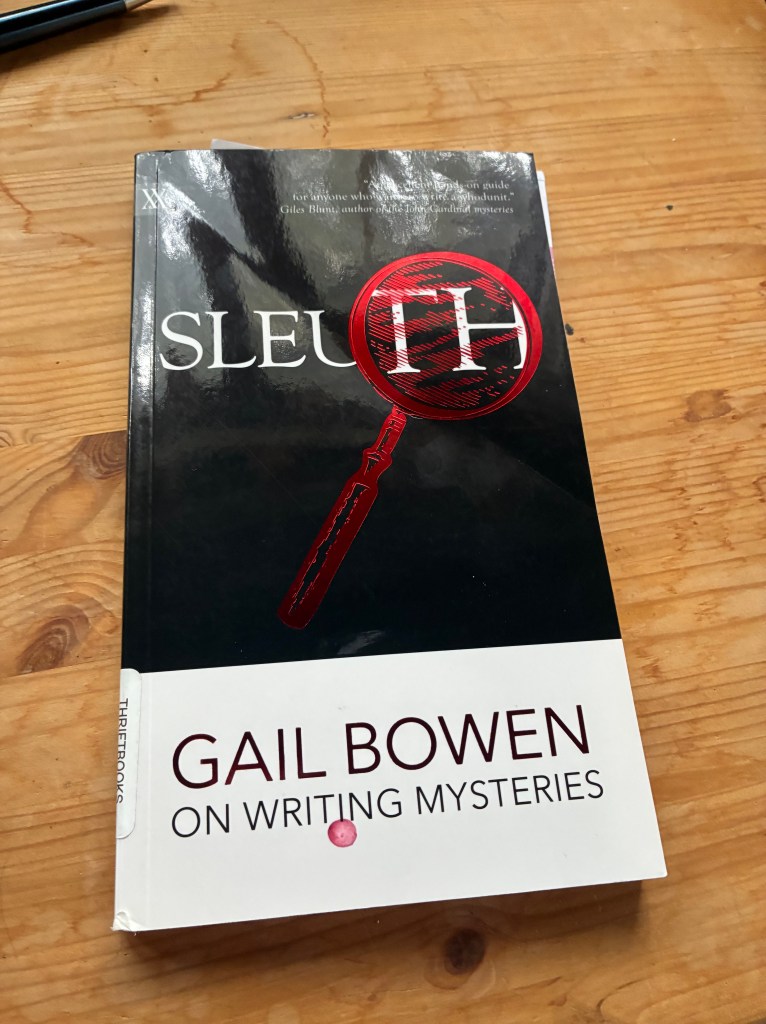
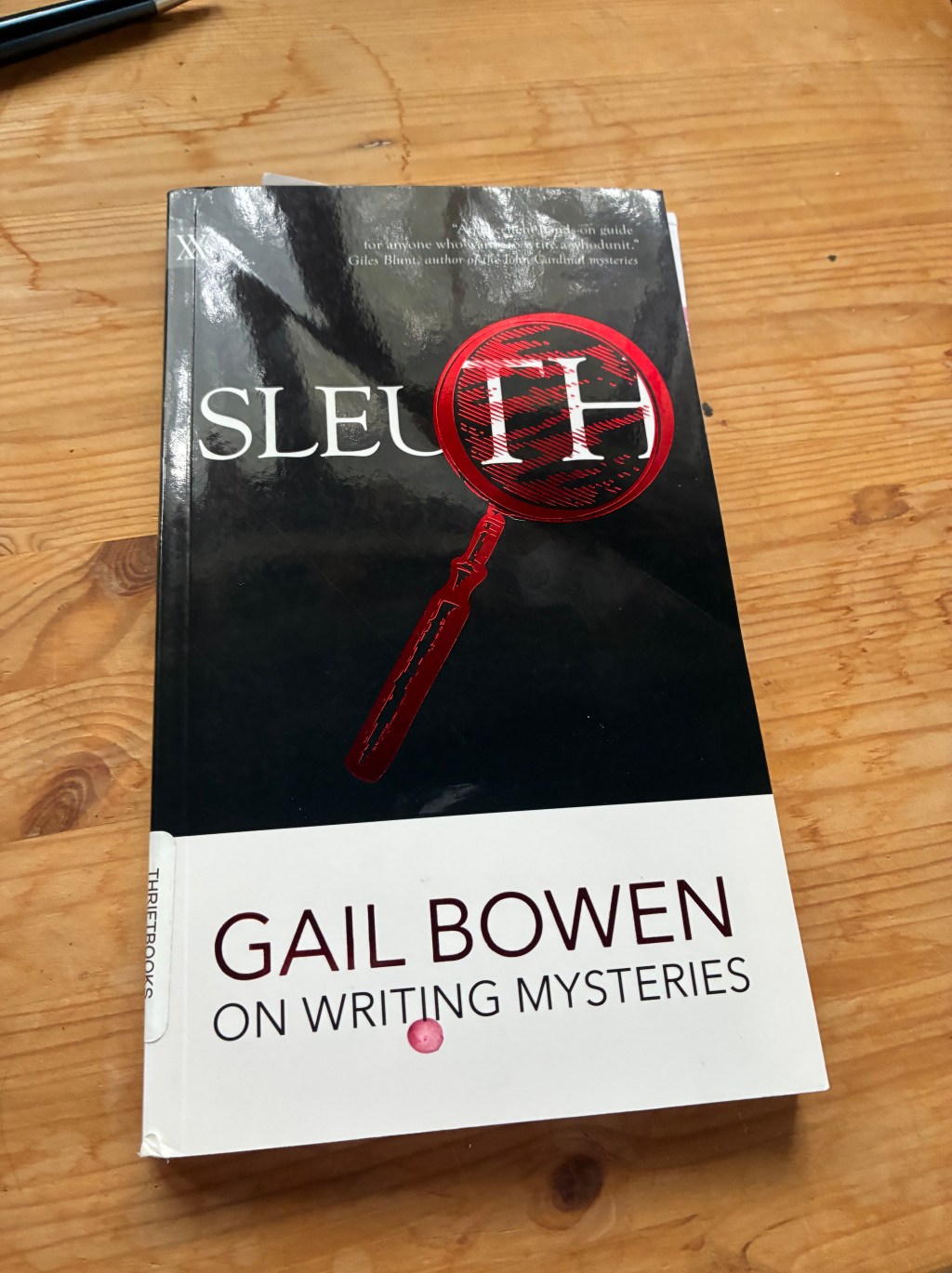
So how do we go about crafting a great mystery? Well, as I am fairly new at the genre I turned to an expert for guidance. Gail Bowden has written an accessible little how-to book called Sleuth, which has been helping me along my own mystery writing journey.
First things first.
Figure out what happened. I know it sounds silly, but before you can write the mystery, it helps to know what your mystery is. Let’s say we are writing an Edwardian murder mystery that takes place at a country manor outside of Belfast.
a. What happened? Connor O’Connor lost all his money gambling and decides to rob his frenemy Sully O’Sullivan at their mutual love interest—Clíona Caruthers’—estate. Sully kills Connor.
Keep your plot simple. Real crimes are almost always simple in nature. Love, money, revenge, jealousy, desperation; people commit crimes to get what they want. Desires are basic things. Is it possible that there is a multi-generational plot to sacrifice the oldest children of Belfast’s wealthiest families to bring continued prosperity to the survivor— using a possessed doll in a never fully explained way? Maybe? But how many chapters do you want to write showing that plot unfold?
The more complex your plot, the more you have to explain in a believable way. Sully catching Connor robbing him, pushing him out a window, and then covering it up is an easy sell.
B. Who was involved? We know that Sully and Connor were involved, but unless we want to see Sully pushing Connor in the first scene and then make our readers second guess this for the whole book (totally viable option) then we want a fuller cast of potential suspects. Clíona is a start; we know she was on site. Each man would have had a man servant, though Connor was down on his luck so maybe his was an accomplice for the robbery? If this was an Agatha Christie novel there would be four or five other house guests along for the ride all of whom would have interesting motivations to kill Connor.
c. Why were they involved?
This may be the most important question that you ask yourself. Why did Connor decide to steal Sully’s watch and money? Was it opportunity or something deeper? Did he realize that Clíona was likely to choose Sully and this was his way of thumbing his nose? Why did Sully push Connor out a window? Why not just embarrass him in front of everyone? Why did Clíona not accept either proposal the year before? Where did she disappear to for the past ten months?
These answers to these questions are going to be the basis for your character arcs. Each character wants something, something gets in their way, how do they react? When we root character’s actions in motivation then we have a metric for success; there is potential for resolution.
d. A little more what happened—details of the event.
When I figure out this part of my mystery, I literally do it in bullet points.
- Everyone arrives at Caruthers Manor to welcome Clíona back from her year trip abroad to America. Sully and Connor snark at each other.
- At dinner Connor feigns drunkenness and wanders off outside to pee.
- Climbing the tree outside Sully’s room, Connor sneaks in and takes several things, then tosses the bag into the bushes below where it is picked up by his footman.
- Sully meanwhile has indigestion (seed this in first scene) and hurries upstairs to use his private facilities, catches Connor in the act and shoves him out the window
- Sully calls for his own footman to cover up the crime by putting Connor in the pond as if he’d drowned.
- Sully returns to the dinner, Connor is found in the pond in the morning, but it is obvious he’s been murdered.
This outline is going to be the framework for the rest of the story. We’ll need to see some of the indigestion from Sully early on so that when he comes back in different clothes to the dinner party there is a plausible non-murder explanation, and he has a reason to leave in the first place. If we have a twist ending, perhaps the indigestion will come back into play again.
Having the footman take off with the stolen goods gives us a great red herring suspect. We just need to weave some more suspicious behavior in from him throughout the book.
e. What are the clues?
Clues are the obvious hints that lead the characters on the page, and the readers, in the direction we want them to go. Unlike foreshadowing which is subtle and often not seen until after the reveal, clues should be obvious to everyone.
- a puddle of scotch in the ficus next to where Connor was standing before dinner shows that he was far less drunk than he pretended.
- blood on a rock beneath Sully’s window show the place where it really happened
- letters from Connor to Clíona that were unopened reveal his repeated proposals (and more?)
- Seeing a recent repair to Sully’s dinner jacket where it tore as Connor grabbed it
These are a few possible examples for the real clues, but we also want clues that could point to our red herring suspect, and even some misdirects that will eventually set up our twist (should we choose to have one)
f. What order should the evidence be discovered?
This all depends on the plot. The nice thing about knowing what your clues are is that you can reveal them as needed and as it fits your story. If we have a detective running around solving the case then it is likely he is going to discover the blood first as it would be part of a routine investigation to do a search of the property. If Clíona is heading up the investigation then maybe she notices the scotch when she goes to tend to her ficus, then pulls out the unopened letters to look for clues.
Once you have your main mystery set up, then it’s time to dig a little deeper into your outlining. (I would not recommend Pantsing a mystery.)
1. What is the format of my book?
In a novel we have an A plot and a B plot. If your mystery is the A plot, the characters will be largely focused on solving the mystery, with the B plot covering character relationships, a second mystery that ties into the first, or some sort of upcoming deadline that is putting pressure on the A plot.
In our Edwardian mystery our A plot is going to be the murder, and our B plot is going to be that Clíona has to marry before 24 or lose her inheritance, the deadline is fast approaching and yet she can’t seem to choose a husband. Now, there is no reason that our A and B plots can’t switch if midway through the story we realize that the B plot is more interesting and we want to devote more time to it.
I make the bold claim that the best mysteries are B plotters. The truth is, anyone who has read a handful of mysteries can figure out the elements pretty quickly; if you as an author are focusing on creating interesting characters and following them through a relational story that includes a mystery, then the reader is going to be distracted away from analyzing the plot to death and then being irritated that it takes the protagonist another ten chapters to discover that the antagonist is his half brother.
If this is a short story there is really only room for an A plot. That doesn’t mean that we can’t have relational drama, it just means that it needs to be a clue as well.
2. Is there going to be a twist?
An A plot mystery should have at least one twist. Something that was in the reader’s face the whole time. Our twist is that Clíona was in America giving birth to a daughter (okay that is the obvious part that the reader figures out early) but the twist is that it was Connor’s child. Clíona intended to leave the girl with a friend, then “adopt” her once Connor and she married, but then she realized he was impoverished and had a gambling problem and kept holding out to see if he would change. The second twist is that Sully knew the whole time! He followed Clíona to America (where he contracted his malady that causes indigestion) and planned on killing Connor anyway.
Often the twist isn’t that something happened, but that there was a far different motivation behind it that the reader expects.
3. Do I need a red herring?
Yes. Red herrings direct the reader’s attention elsewhere. This is more important in A plot mysteries, but even a B plotter should have some misdirect. I like it when the misdirect is still part of the case—so the footman really does run off with the watch and valuables—but it is secondary to the ultimate crime.
4. What are the red herring clues and how may they be explained away?
Some of the red herring clues should direct us to the twist, so in the bag of stolen stuff are a couple letters from Clíona to her mother speaking about the cholera epidemic that has swept New York, or telling of her “friend” making her the godmother of a baby girl. Tuck the letters into papers found in Sully’s desk. In our story, maybe Sully is staying in the room Clíona’s mother favors so there is plausible reason to believe that the letters are her mom’s and not those stolen by Sully.
The last question we are going to ask ourselves is How does this mystery tie into the protagonist’s development as a character?
We always want to start out with a flawed protagonist who through the experience of our plot changes as a person—for better or worse. In our story, let’s say Clíona is trying to solve the murder before her family is disgraced (or so the reader thinks until the twist). She is an optimist who blithely goes through life assuming that everything will work out when and as it is supposed to. Through her experience with Collin’s death, and solving the mystery she is going to see a side of her friends and family that opens her eyes to the harsher realities of the world.
In the end she might choose to marry or not—but if she does, Sully is absolutely going to die a few months later from symptoms attributed to his indigestion.
As we are asking the character development question a few things to keep in mind for plot reasons:
a. Can my flaws hinder
B. Can my strengths help
C. Biases?
Essentially, can I convolute the mystery using my protagonist’s character traits. Are they too loyal? Myopic? So brilliant they can’t imagine being outsmarted? Even Sherlock Holmes has flaws that impact his cases.
And that is how to plot out your mystery!
Now, I highly suggest you track down a copy of Sleuth. It is under 150 pages and chock full of wise advice for writing start to finish. But until you do, hopefully my advice will get you started.
Happy Writing this week!
 Mamasquatch the Writer
Leave a comment