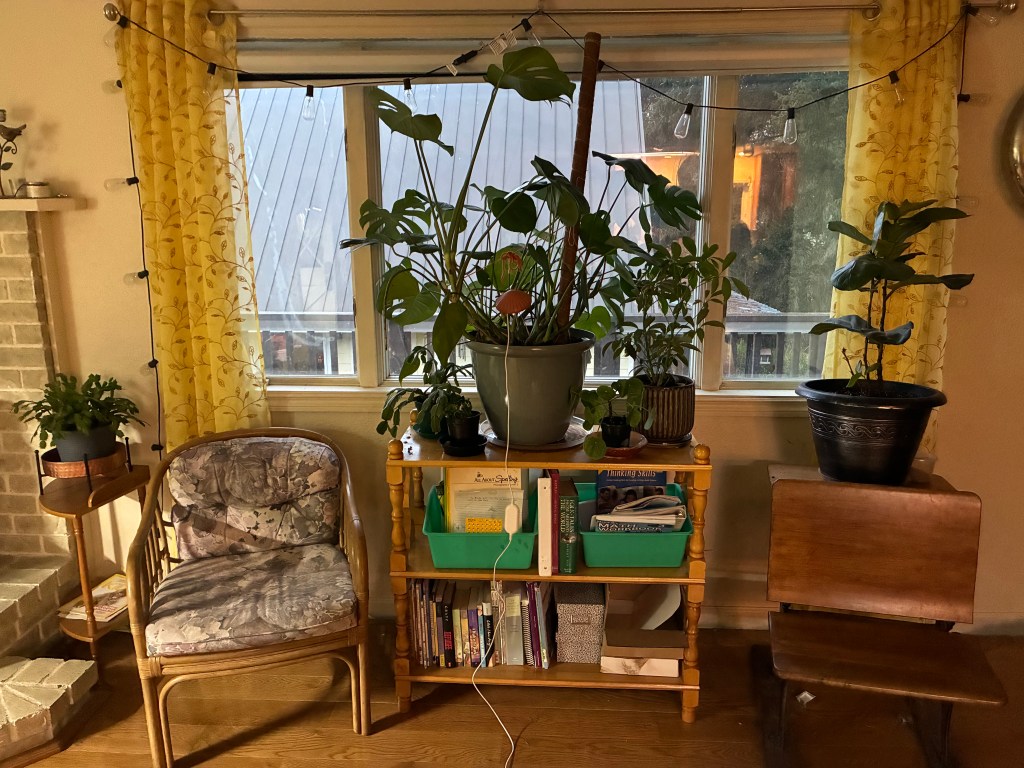
I’ve gotten into a bit of a decluttering kick this week. Starting new projects always makes me want to tidy up my office and put things in order, and part of that is going through my books. For reference I’ve stuck a picture below of about half of my dedicated research books.
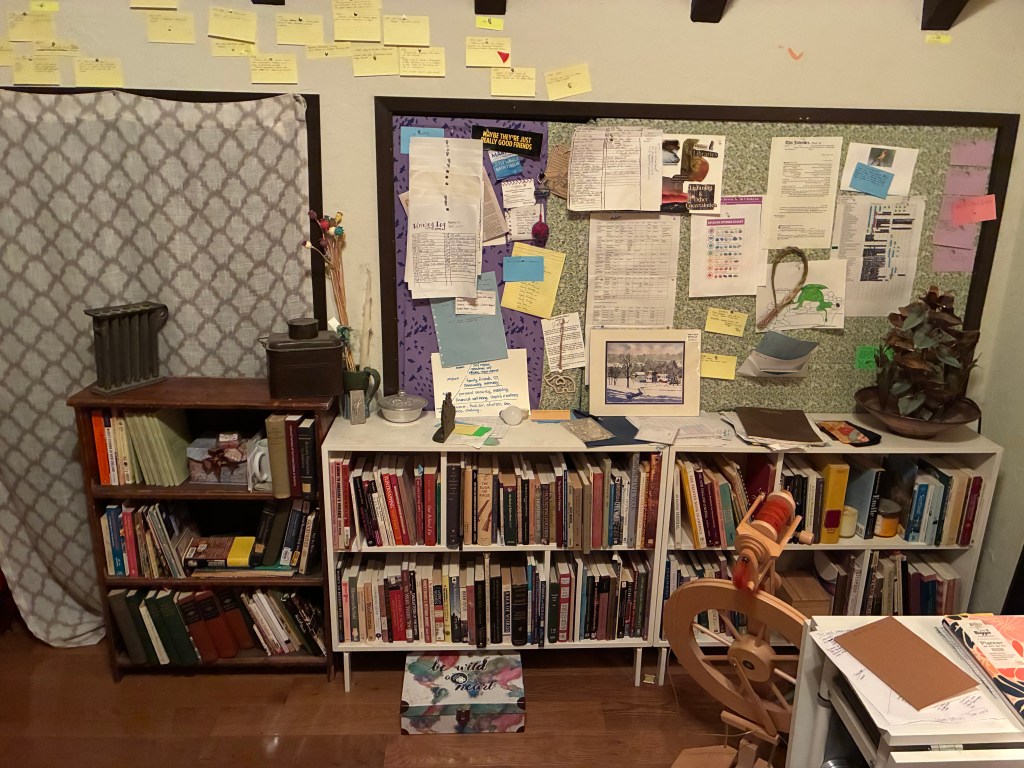
This doesn’t count the three shelves of non fiction topical books or comp books that I expect won’t stick around in my collection past a single read/flip through. (I should note that we have a fantastic book store which gives trade in store credit. I swap books out like it’s a library and still rarely drop below $300 of credit on my account.) I like reading books; I like collecting books; many intelligent people have pointed out they are two different hobbies.
The problem is that having too many books means that the ones you are looking for can get lost in your library, or one of the kid’s libraries, or the husband’s stacks. So using a question I learned from Minimalist Mom, I sat down in front of my bookshelves and started perusing. “Am I using this now?” I’d ask myself. “No? Am I going to use it?”
While I managed to weed out a solid twenty books from my collection in a single sitting, something else happened as well: while browsing, I stumbled across three new plot ideas for my historical series. I also started reading a book about shipwrecks on the pacific coast written in the middle of the last century and HOLY CATS there is some problematic language and ideas (The author mentions “the unrivaled Southern General, Jefferson Davis” at one point…) but the shipwreck info is fascinating.
I’m using this as an illustration of why I have such a large collection of research books, or maybe as an excuse to myself for why I have so many books watching me sleep every night. A book contains information you may not know you need, in a format in which it is still readily accessible.
The internet is great. I have a silly “vs” in the title not because I think books are universally better than the internet, but because I think they are better for certain research. If I need to know where Puritans kept their hay in 1690, I go to the internet; if I want to get the historic barn vibe correct in my writing, I am going to linger in the 300 pages of my “Historic American Barns” coffee table book that I got at the Friends of the Library book sale for $1.
While I’m perusing the pages of a book I am almost guaranteed to run into rabbit trails. Sure, I’m going to get the info about the barns common in 17th century Massachusetts, but I’m going to also get a peek at the wider implications of barn design brought to America by the Dutch, and the dual purposes of barns in times of conflict. I’m going to learn about people and places that may eventually become characters or jumping off points for other stories. I have a stack of notecards on my desk that are just names, events, or places that I think would make great narrative fodder—most of which came from the pages of books.
I love a list book: the type that has “twenty most scandalous women of the Wisconsin woods” or “300 years of kitchen collectables”. Books written fifty or more years ago are a treat because they are detailing a whole different history than most of us today recognize (problematic though their viewpoint may be). If you think about it, the more time that passes, the more views on what is important changes. We pick out the “big” things and the rest settles into the stacks. Reading niche or older topical books allows us to uncover this buried history.
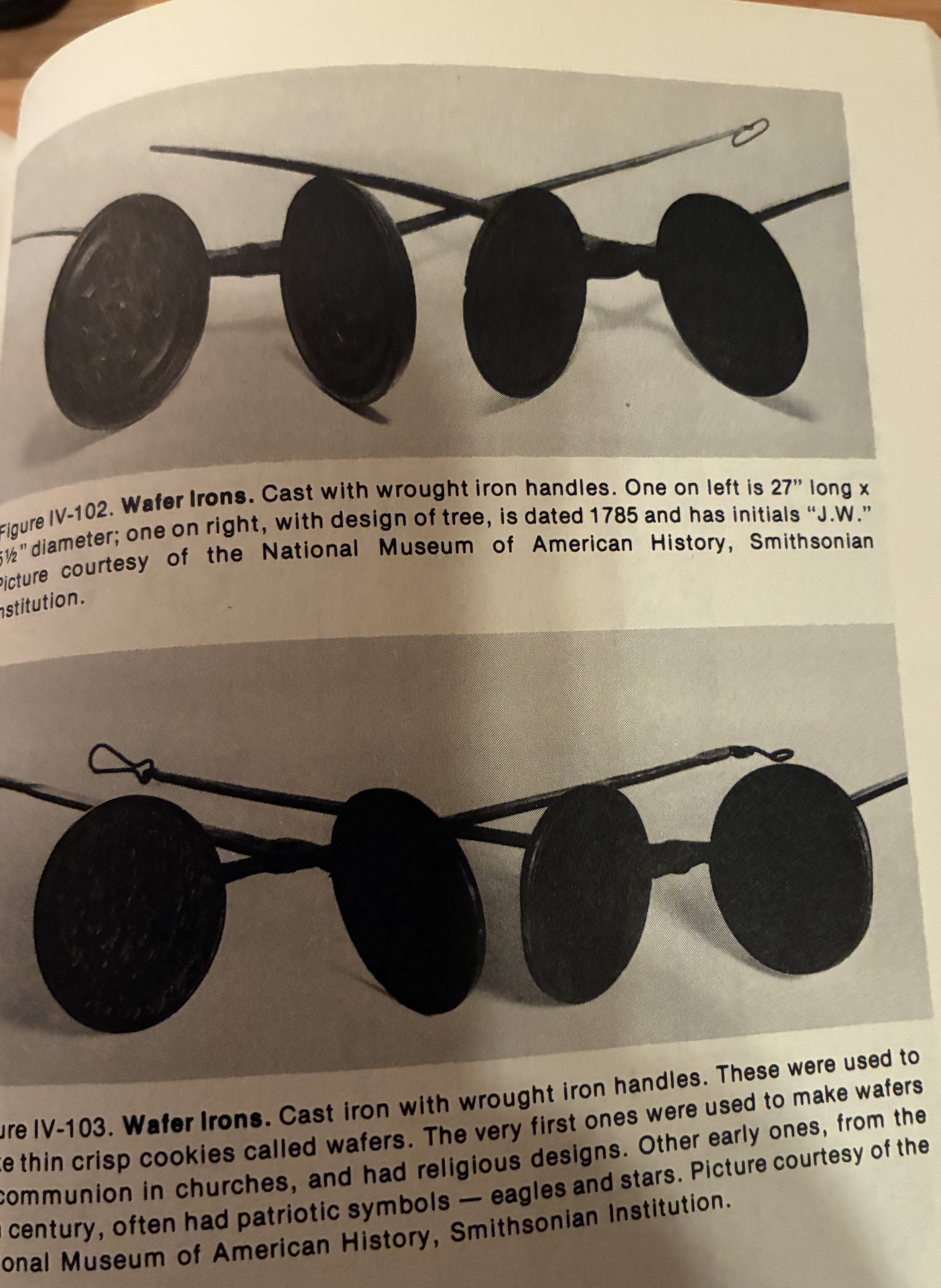
As for the kitchen collectable book, mine is in good company with American antique catalogues, reprints of 19th century dress pattern books, and a couple Sears catalogues. Not only are these enjoyable to flip through for the kiddos, but they contain so much of the “I didn’t know what I didn’t know!” content. Pictured below is an 18th century waffle iron.
One of my favorite categories of books are map compendiums. I have several my brother in law downsized when he moved to Texas. They detail major battles and campaigns of various wars, or historical periods. I spent weeks using one to outline major events of a book that takes place during the Revolutionary War; it contained maps, photos of historical documents, and information that would have been spread over numerous websites. Map books are great for rabbit trails, largely because they expand our focus beyond the immediate in a very concrete way. We can look at the railroad or river winding through our setting and follow it to any number of plausible new destinations all with their own history and characters.
The best thing about the internet is that it makes information accessible at a low cost to the researcher. It is also fast. I can type in keywords and a dozen links pop up. I am vehemently anti AI, so no comment there, but even using my own brain I can get a targeted answer in less time than it would take to find the useful book on my shelf. Sometimes this is exactly what I need.
But. Much of the joy of writing historical fiction is the research itself. I love stumbling across an acorn that turns into a plot oak tree. I love delving into a topic or a place in time and learning everything about it. I have at least twelve books on different Enlightenment philosophers—all paperback, most found in the $1 a bag portion of the book sale which may be a comment about why we are where we are in the current political climate—which I may never understand but darn it I am going to read anyway.
I want to flip pages and see pictures and get distracted by the strange people that long dead authors thought were worth mentioning, not pop up ads and phone notifications.
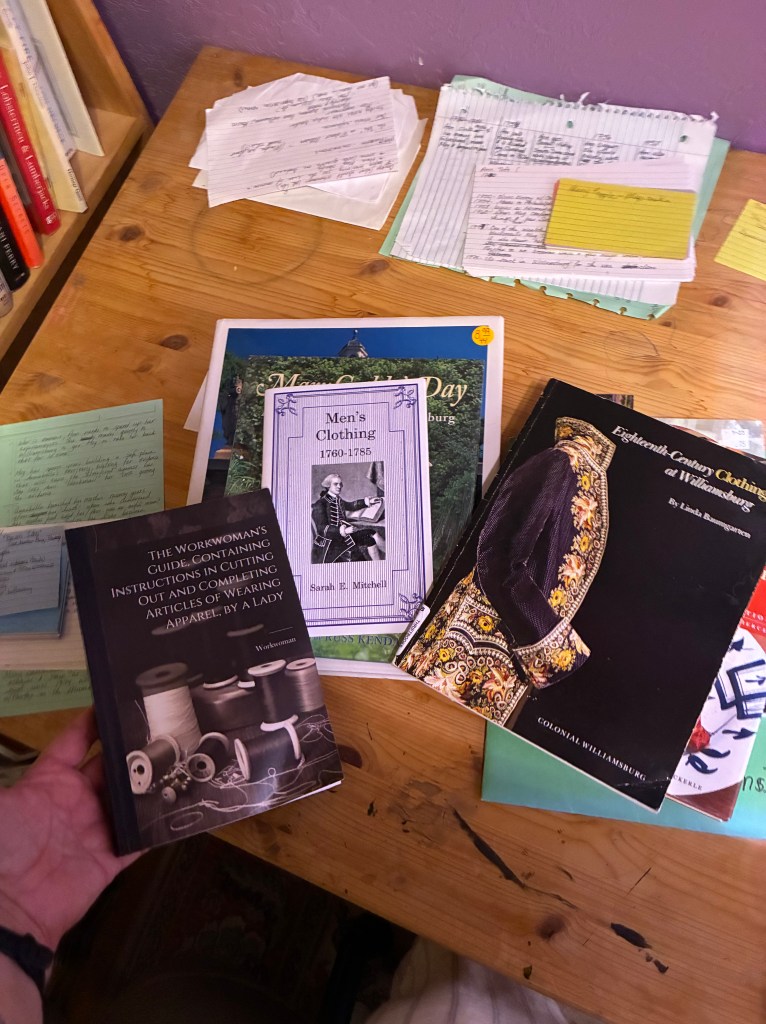
This week! Get lost in a random book, go down a research rabbit hole, and/or listen to a podcast about something seemingly totally unrelated to your current project—but be open to finding connections.
Bottom of the page side note: Before I buy a book that costs more than $1 I tend to try and find a podcast featuring the author. (The exception here is if I have read numerous peer reviewed journal articles that all quote the same book.) In a half hour interview I can usually tell if the book is going to be all the reviews promise. Some books are fascinating to read, but just won’t do much for your plot.
 Mamasquatch the Writer
Leave a comment