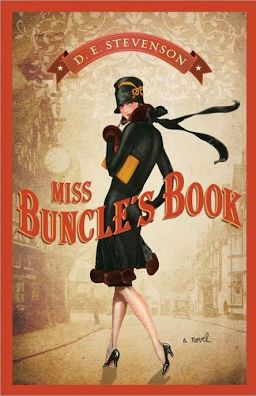
Ms. Bunkle’s Book by D.E. Stevenson is a novel that takes place in a small British village in the 1930’s. Ms.Bunkle publishes a book under the pseudonym John Smith that gives and honest portrayal of her neighbors. Aghast, many of the neighbors attempt to discover the author’s identity while things in the book begin to happen in real life.
Who recommended this book? Ruth Leamy—cousin by marriage—who is an author herself as well as an expert of all things British.
What did I think? I thought this book was perfect. It was written in the 1930’s and it reminded me of Saki’s work, with a little less sauce. Every character is crafted with plain goals and desires and the omniscient narrator is neither scathing nor overly kind to any of them, instead leaving the reader to make their own decisions. The book assumes the reader is intelligent and doesn’t need overwhelming moral exposition.
The form of the novel is very clever. I don’t want to give spoilers because I plan on recommending this book to just about everyone, but the mirroring in the novel feels like a clever mechanism constructed by the author rather than a heavy handed wink to the reader.
The pacing of the story is pleasant. There is tension because so many characters have stakes in the story—many of them conflicting—and since the characters are so captivating, the stakes feel much higher than they would had the author not been so careful at rounding out her cast.
What was most surprising to me were the modern topics hinted at: two female characters upset by the depiction of their friendship and fear of scandal; the author is baffled at their reactions but the reader is expected to be more wise about the connotations Ms. Bunkle has unwittingly created.
Another character is exposed to have been a chorus girl before her prosperous marriage. She is not vilified because of her past but her present behaviors—which include serving awful sandwiches at her teas.
The morality in the book sits in a strange place—post Victorian pearl clutching and pre-post WW2 nouveau patriarchy reset—and so often made me ask “how was this received at the time?” It will also make it more palatable to a modern audience who would be less generous to slut shaming, anti-queer rhetoric, or generic puritanical morality. On the other hand, social rules of politeness and standing still apply which offer a peek into history. Fun fun fun.
The narrative style is delightful. It felt as if the narrator was sitting down for a chat and we were looking down at the village. PoV hops easily between characters as they pass in the streets or share space, or we follow one person and then jump back a few moments to the person they pass and follow them the other direction. While the book is written largely in past tense it is in recent past tense with occasional mentions of the present. It works.
The resolution of the book is also perfect. Everything comes together neatly and not always as expected. Some elements are predictable and yet the characters are so fun that it is a joy to see them earn their deserved endings.
Upon finishing this book I handed it over to the first in the long list of people I plan on lending it to and went to see if there is a sequel. There is, and it is on my list.
To whom would I recommend this book? Just about anyone? On one hand the story is delightful. On the other, the craft elements are fantastic. Now I suppose there are some of my friends out there who don’t want to read about small British villages unless there is murder or robots or vampires involved, then this book might not be a prime choice. Otherwise! Read this book!
No sex, violence, or profanity. Some poor behavior. Rated G.
Writing Prompt: When a secret is revealed, Jane must keep everyone from finding out that she is the one who told…


Leave a comment