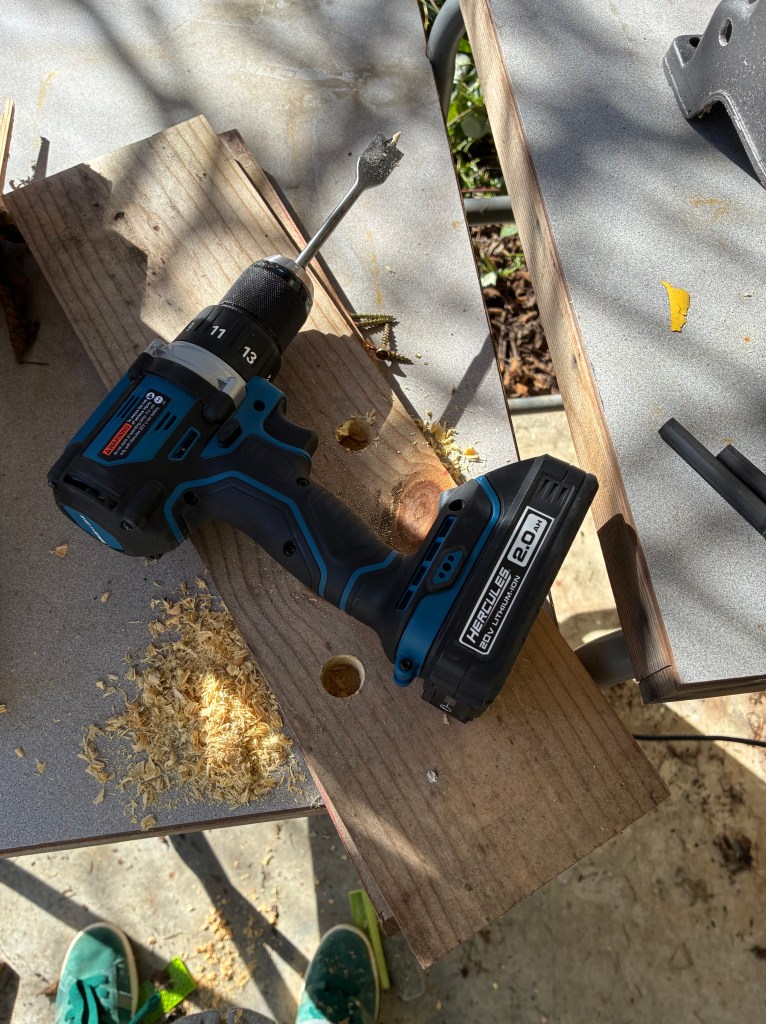
I am a dabbler. It starts with a “hmmm, that might be interesting…” or “Ohhh, I wanna try that…” or a “have you ever thought about…” and then there I am knee deep in some new hobby or activity. Some of them stick: I love spinning yarn, Writing—obviously— and growing houseplants. Others, not so much: scrapbooking, macrame, collage, calligraphy, anything to do with concrete. Many of my dabbles are things that I do occasionally: Historical garment construction, Lino carving, natural fiber dying, those melty bead things? Over the years I’ve learned not to invest much into specific hobbies, because then I feel obligated to keep going, sometimes long after my hyper focus has left the train station.
This past Christmas my dad got me a woodworking lathe and a month later I started taking weekly classes through Strait Turners, Sequim’s local woodturning club. I am hardly a savant, but I have steady hands and good visual spacial skills, and over the last six weeks I’ve grown to really enjoy wood turning. The problem? The Lathe is the cheap part.
One of the great things about writing is that any one can do it for free. Especially with the internet and access to library materials, writing is becoming more accessible to those folks without a formal education on the subject.
I love teaching crochet, hand sewing, and simple fiber arts because again, accessibility. Needle felting takes ten dollars of equipment and wool. Our next three 4H projects are all up cycling based because I want to train my amazing kid artists how to glean from the world around them.
Woodturning does involve finding wood in the wild, but everything else costs money. At least the classes were cheap? For $20, I got to participate in a four hour class with supplies and tools to use, plus 2 hours of open studio time later in the week. During those six weeks of classes (and some hang out time with my new wood turning buddies) I was able to figure out the sort of projects I am interesting in working, and the actual tools required to do them well.
Spoiler alert here, just about everything is more enjoyable with the right tools. In writing this is my favorite pens, and a computer where the space bar works correctly; in crochet it is a hook with the right kind of handle, and yarn that feels great through the fingers. I went into yarn spinning on a wheel that had tricky tension and it was a struggle. When after a few hours a new instructor came in and said “try this, that wheel sucks” and everything clicked? It was magic.
There are four key “right tools” to wood turning.
1. A lathe that is at the right height for the user. Turning is all about body support. You are supporting and wielding the carving tools with your entire body, anchoring the tools and leaning this way and that to get the cut you are striving for. Being able to wield your tools without hunching over is everything.
2. Sharp tools. You can’t cut wood with dull tools; you can butcher your projects without the proper edge. This means that you either need to have carbide tools that have replaceable tips, or you have a bench grinder and jig at the ready to sharpen as needed. Cheap tools are made of softer metal that need new edges more often. Expensive tools can run well over $100 each. There are a few basic tools that a turner uses all the time (a spindle gouge, a bowl gouge, a parting tool, a roughing gouge, etc), but there are no end of tools that someone will try and sell you.
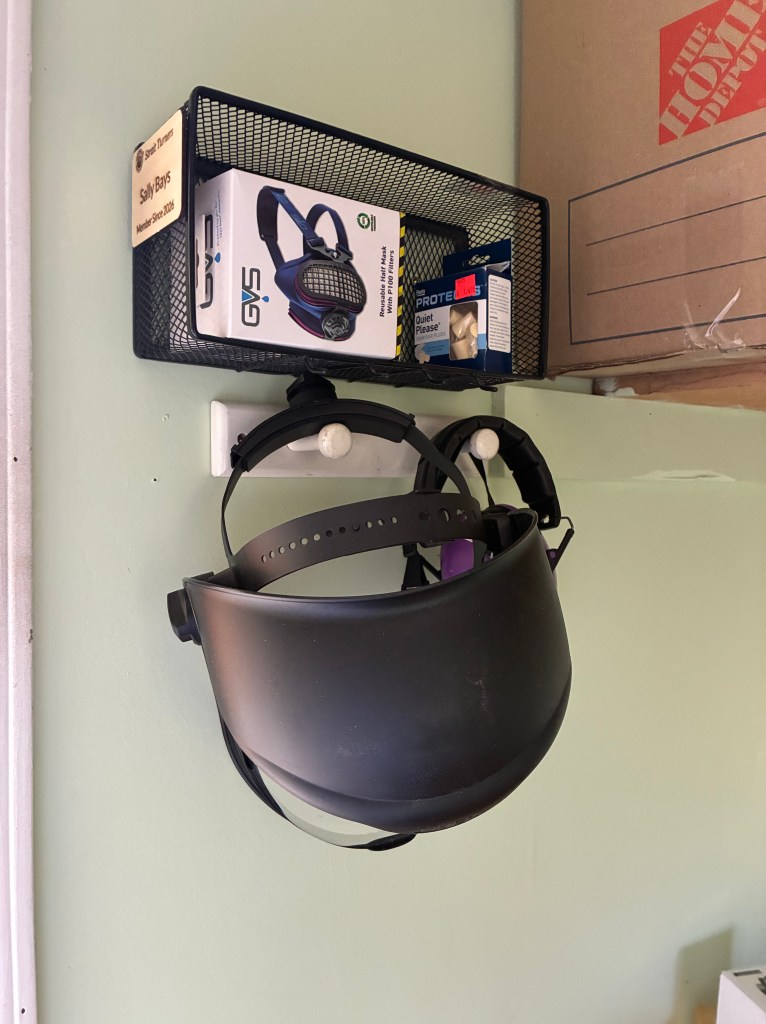
3. Safety equipment. The basics are a face shield to keep shavings out of your eyes and chunks of wood from taking out your nose; an apron or cover shirt to keep shavings out of your bra; and close toed shoes. If you are going to be doing sanding, you need a ventilation system of varying complexity, face masks—or a face shield that has a built in vent system—and ear protection because of the really loud vent system.
4. Finishing products. Do you know how many types of sandpaper there are? Plus oils, glues, finishing sprays, sanding cream, wood conditioners. Bounty paper towels. Yes. Specifically Bounty.
Now, those are just the basics. As with any hobbies, there are other tools that make the jobs more fun.
-beading tools help make even grooves or ridges in the wood
-chucks hold anything with a tenon (think of holding something by the tips of your fingers) so that the turner can have access without drilling holes and using a faceplate. These are great for bowls, containers, and even pens and wine corkers.
-pen making equipment. You need a press, kits, and special sized wood “blanks”.
-templates and replicators for making things production style.
Want to cut your own wood? Well better get a band saw! And a chainsaw. A drill press is handy if you want to do live edge wood. And fresh wood cures better in a wood kiln…
Whew. Let’s take a deep breath and take a step back from the cash register.
My suggestion to anyone wanting to try out wood turning is to take classes with a local store or wood turning club. Then, after you’ve figured out what brings you joy, start looking used.
I found my small lathe through a wood turning friend and got it, along with a few key parts for half of what I would have paid new. I’m keeping an eye out for band saws on our local auction site—they often sell for less than $50. Until then, I’ll take my wood into my friend’s shops along with platters of homemade cookies.
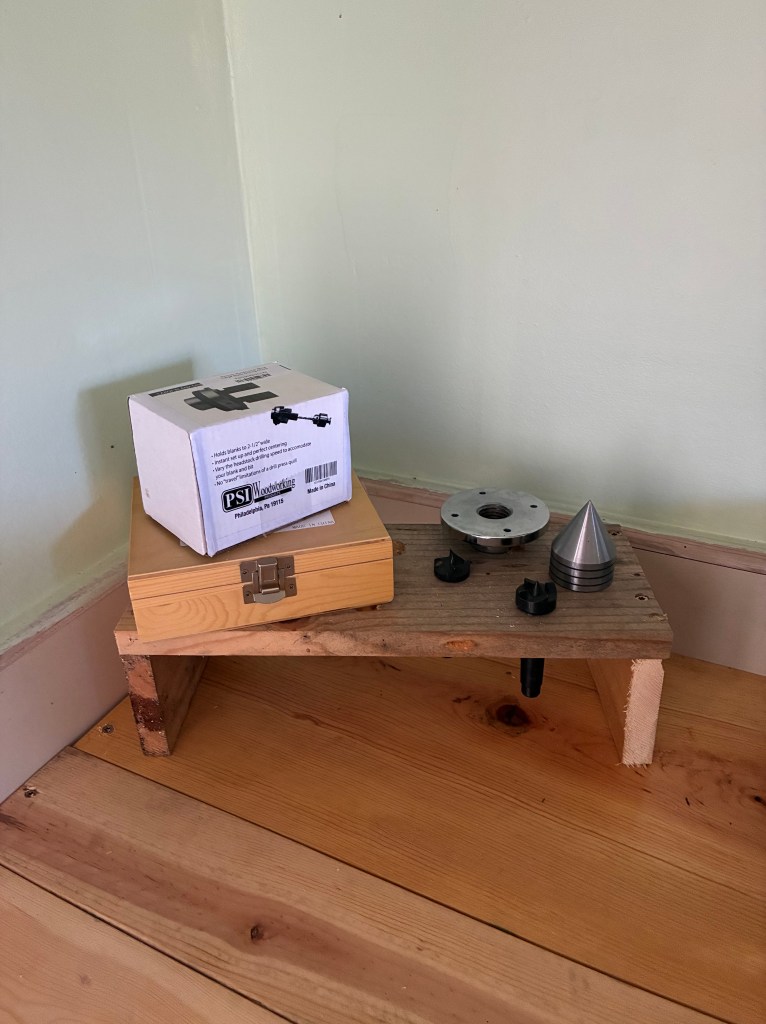
There are a lot of containers required for keeping bits, bobs, and blanks sorted properly, so I repurpose things from around the house, and keep my eye out at thrift stores for $1 treasures. I also used some scrap wood we had laying around to make my own holders.
Instead of a costly ventilation system, I’ve opted for doing a lot of my turning on a small lathe outside. My very tiny shop has a covered porch that is perfect much of the year, but the patio or yard would work fine as long as you have a stable surface. I have the added bonus of cute kids playing in the creek while I’m working.

Skip buying tool sets, as you aren’t likely to use many of the tools, and instead invest in a couple key items. What those key items are will depend on the direction you are going with your art. I decided that pens, crochet hooks, and other gift items require the time and materials that I have to spend at the moment. I do want to play around with bowls more, but I will do that in class where I have access to those resources. I bought tools that will make these small projects fun.
I think of wood turning like moving out into your first apartment. You buy used, your parents maybe take you shopping at the specialty store, there is some flat pack furniture involved. Eventually you upgrade things that are important to you. The important thing is that you have the basics, and don’t feel bad when you go over to someone else’s place and they have cool toys that you don’t—maybe you’ll get there in twenty years, or maybe you’ll decide that lion taming is more your hobby and go that direction instead.
Happy Writing folks! Enjoy this crazy March weather!

 Mamasquatch the Writer
Leave a comment