Back in the nineties someone gave me a copy of The Five Love Languages, by Gary Chapman. The idea is that everyone gives and receives love—primarily—in one of five ways and if you can just figure out what your language is, and what your partner’s is, then you’ll never have trouble showing each other love again!
Okay, maybe that wasn’t the author’s intended message, but it was the popular takeaway from conservative evangelical readings in my world at the time.
So what are these five languages? Well, to have any Bible camp creds you had to be able to rattle off at least four. Physical touch, words of affirmation, Gifts, quality time, and Acts of service. (Still got it!) The Five Love Languages may not be a standout in the pseudo social science world, but the author wasn’t totally off base. People do value different components of relationships differently, and they often unconsciously show affection of the type they enjoy receiving themselves.
I imagine by this point you are asking “what does this have to do with writing? Are you suggesting that we should take into consideration how a character gives and receives love when crafting a romantic arc?”
Um, yes. Thanks for jumping the gun there and stealing my thunder. But also, let me explain why I think this could be a valuable exercise.
One of the biggest cliche’s out there is when two characters have a misunderstanding that could be cleared up with a simple conversation. What I want to see on the page is deeply rooted tension stemming from long running miscommunication. A great way to achieve this is for two characters not to understand that the other is showing love in their own way.
Let’s take a look at how we might use each of the Love Languages to create some tasty tension.
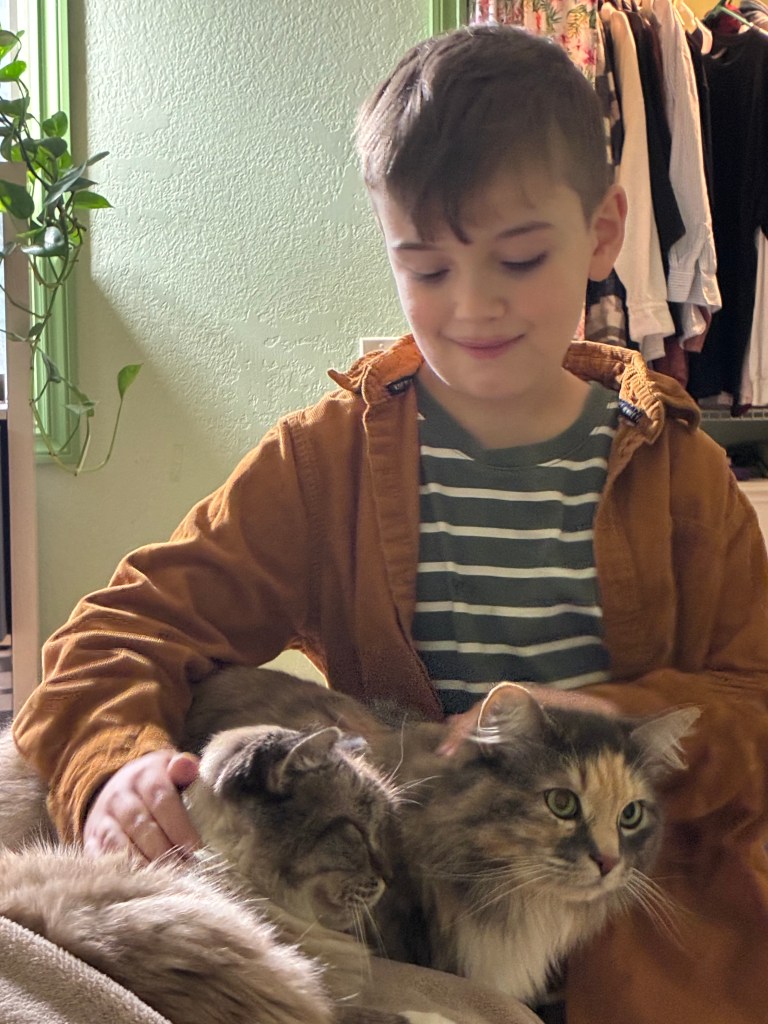
Physical touch: Every nineties Bible Camp Guy claimed that physical touch was their love language. I am making this a universal statement based on my own experience but I’ll wager a shiny penny that I won’t get any counter arguments. Now I haven’t read the book in twenty five years but I remember the author putting some sort of caveat in the chapter that most everyone with functioning nerve ends likes some sort of physical touch. I don’t know exactly where the line between normal dopamine release and “I feel loved because you are skritching my head” falls, but for the sake of the article let’s pretend it exists.
For some people, physical intimacy is their way of saying I love you, I’m thinking about you, I care you exist. For some other people a handshake is too much contact. (Then there are those of us with sensory issues who can go from sitting on your lap to “nobody come within ten feet of me” in the blink of an overstimulated eye). Putting any combination of these folks in a relationship is going to test everyone’s boundaries.
This is a great element to throw into a character with boundary or communication issues. It could be a great catalyst for their personal growth arc if you have repeated instances where the character is feeling uncomfortable. If you want to set up the Cuddly character as problematic, you can have them guilt or shame their partner for their coldness or push at those boundaries purposefully.
For a more benevolent Cuddler, have the partner leave their feelings unspoken. It is a fine line before the reader starts judging and laying blame, especially since—in Washington State at least— 1 in 8 adults will experience partner violence of some sort.
The next four Love Languages are less tricky to balance.
Words of Affirmation can be a huge deal to characters seeking approval. Everyone loves hearing how great they are or how much they are appreciated, though maybe less so for those of us who grew up heaped with praise. For the Words of Affirmation lover, actions speak nothing without words to back them up.
A character who seeks out words of affirmation runs the risk of appearing needy to the readers. Nobody likes a pick-me girl—unless the character is supposed to be a pick-me girl. If you are trying to avoid this, have the character respond to unbidden praise or acknowledgment with very specific physical descriptions.
“Thank you so much for grabbing my kitten out of traffic mister! You sure are brave!” The little girl cried, hugging the reluctant animal to her chest as she swung from side to side.
Lars flushed at the praise, his heart still pounding from the frantic dash. With a final nod to the girl’s mother he turned and walked, a little taller, away.
A Words character can be paired well with a Non Words character for very effective miscommunication. While some of the other love languages might be harder to read on the page, having one character screaming “You never say you love me!” To their partner, who admittedly never says it out loud but has spent the last five chapters showering them in gifts, or waiting on them hand and foot feels relatable—neither party is wrong, they just aren’t speaking the same language.
Quality time is traditionally explained as well, spending time with someone where the focus is pleasant. Angry roadtrips with screaming kids might put two characters in the same car but it would not be considered quality time. Quality time characters may come across as emotionally needy, and taken to an extreme, two of these folks in a relationship might look emotionally co-dependent.
While it is’nt in the description, I think there is something to the idea of Quality time also including offering a partner the time they need to do things they enjoy by themselves. Or maybe that would be considered a Gift. I’m not rereading the boo again.
Gifts happens to be the way I show love, especially handmade gifts. My brain naturally tucks away random facts about my friends and family…and random strangers; all year I make or buy little things that I know will make my people happy. It brings me a lot of joy.
Now, could this be misconstrued as Love Bombing? Sure, if you’re heartless. Although using a character’s love of Gifts as a character flaw or a base for a love bombing plot arc is a grand idea. I’ve seen some story lines where a desire to give gifts leads to debt and conflict as well.
Acts of service is my receiving love language—specifically bringing me tea. You want to woo this lady? Set a steaming mug next to me and my heart will grow three sizes. Acts of Service may look like a character doing extra work around the house, picking up a friend’s kids, or bringing meals to a sick neighbor. Think of them as thoughtful deeds that makes someone’s life a little warmer.
Or is that character a doormat? Servile and fawning? Are they trying to keep in someone else’s good graces? I think you can write the story however you like, but if you want a reader to like the Acts of Service-server their deeds should be done out of benevolence and likely be paired with at least some backbone. If the recipient of the Acts is not grateful they will automatically be construed in a negative light.
So why is all of this useful—other than the handful of writing ideas I threw in there?
We can never know our characters too well. Feeling loved is a fundamental factor in a human’s response to others. Growing up and beyond we often use other’s responses and behaviors as a mirror; if we are loved then we believe we deserve love. Look at “bad” people out in the world and almost invariably there was a lack of love that shaped that person’s behavior. Now, I am not universally blaming parents for their kids issues. That lack of love could have come from parents, peers, systematic “isms”, romantic partners, teachers or authority figures, structured religions, etc.
On the flip side, well adjusted people tend to have strong familial and community ties—or they’ve gone through a lot of therapy. The more a character likes themselves, the less they are going to be seeking out external sources of love. The groveler, the pick-me girl, the narcissist, the manipulator should have a dearth of love in their backgrounds that have caused this personality flaw.
A common issue is writing problematic relationships is when the antagonist is a villain who has no pattern to their behavior. Have that antagonistic character utilize another’s love languages to love bomb or manipulate is a great way to give their behavior a shape and logic.
In this same vein, even acts that are highly inappropriate or offensive can be rooted in motivations that the perpetrator perceive as love. The misperception may be from a cultural blindness, generational, or stemming from normalization in childhood. If love, however misguided, is at the root of something, it makes it feel more forgivable? Or at least relatable.
Stepping back over to the less problematic relationships. Knowing a character’s love language can help with writing a cohesive character. If Clara is feeling overwhelmed by her life and the mental load of being a full time private eye, PTA vice president, and mom of three, she is going to respond very differently if her partner buys her a box of chocolates vs. hires a housekeeper (who ends up being a spy).
If George craves the affirmation he never got from his mother and is confronted with two romantic partner options is he more likely to go for a. The strong silent guy who ignores him but leaves chocolates on his desk? Or b. Larry who gets his bagel order wrong every day but always compliments George’s snazzy ties and tells him how smart he is? Okay 50/50, but the reader is going to be rooting for Larry because we know he’s the right option.
Love languages are a pseudo social science in the vein of the Meyer’s Briggs test and magazine horoscopes. They are broad enough to feel plausible, and more importantly are fun to talk about. As we are heading into the back side of February I hope you take time to celebrate love where you can.
Writing Exercise: Write an interaction with two characters (keeping their love languages in mind), then write the same interaction but give each character a different set of love languages. Repeat as many times as you’d like.
 Mamasquatch the Writer
Leave a comment