This week was a busy one in my writing world. I’ve moved my protagonist from Philadelphia to Williamsburg and jumped forward fourteen years. I have all of one chapter to summarize nine of those years and set up the book’s climax. All of that would be complex enough, but to add to the weight of the load I also have to set up my protagonist’s historically plausible stance on enslaving people.
First things first, when I create a character I know they are going to have flaws and a character arc, but also there are some things that automatically make a character unredeemable to readers. Slavery is one of those tricky issues to navigate for that sweet spot in the problematic characterization bell curve. Thankfully this is a first draft which means I can go ahead and be as problematic as I want and no-one is going to see it.
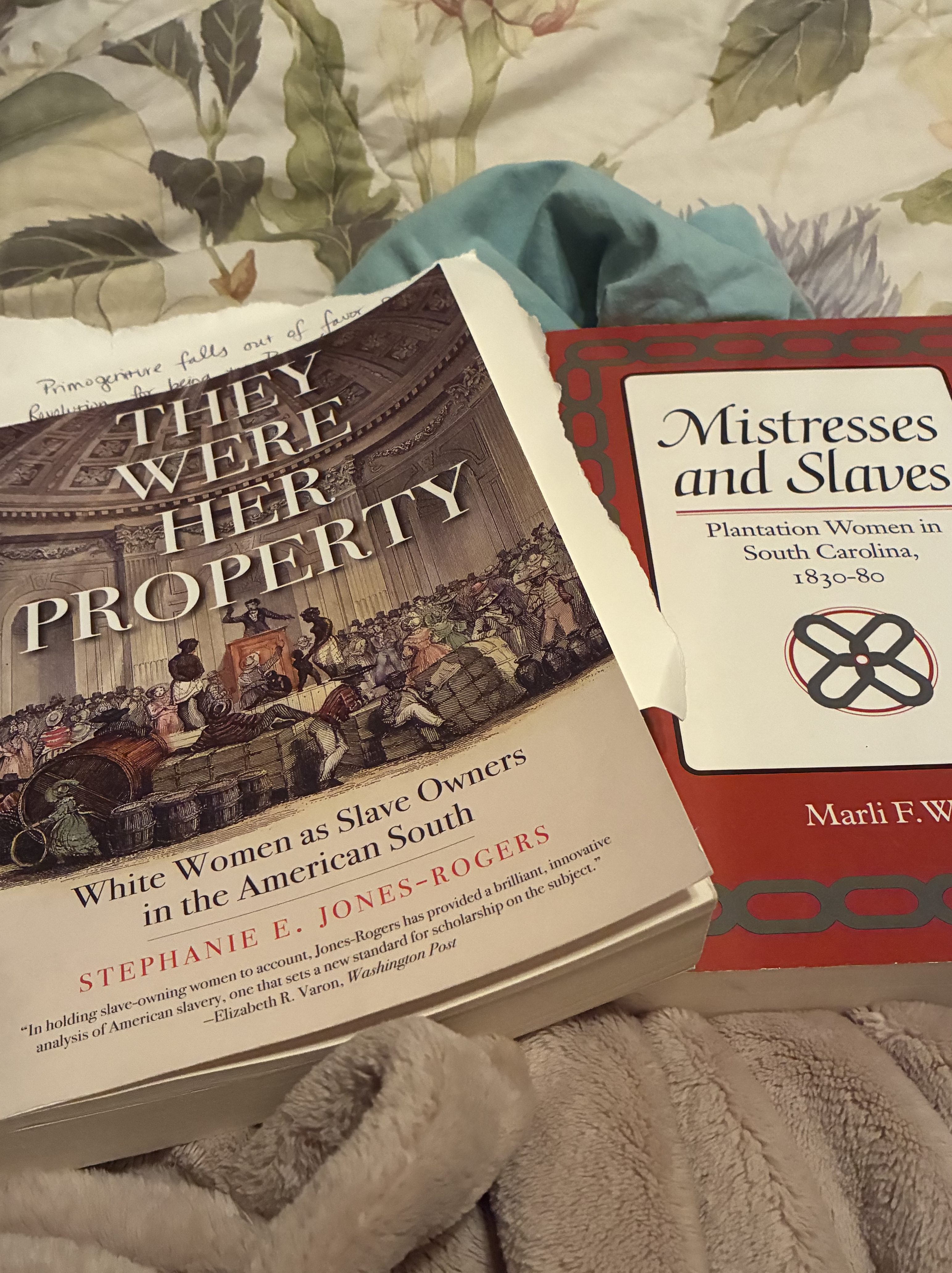
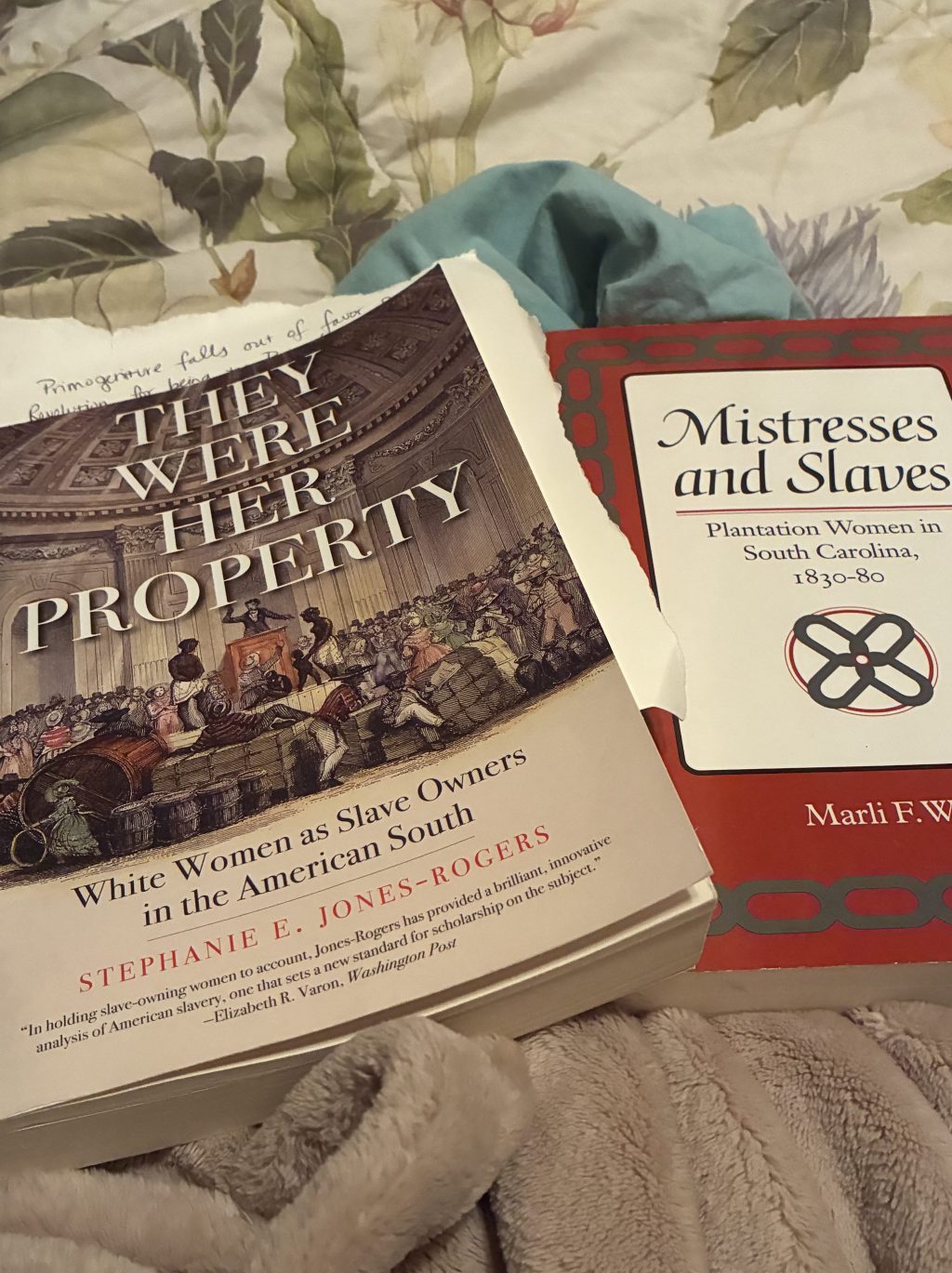
I always like to start “Writing things I personally haven’t experienced or wouldn’t have experienced” with research. I have several books that use primary source documents and oral history records to detail experiences of enslaved people and those that owned them, some of which are focused on the female experience. I am looking to accurately represent experiences within the context of my narrative, without appropriating or romanticizing.
For much of literary history, Black stories were slave stories. From Uncle Tom’s Cabin to Roots, Popular media tends to focus on a very narrow window of experiences lived by Black characters. Now, I am not saying that an author should untangle or eliminate slavery, systematic racism, and oppression from a Black character’s story, but nor should they make that the sole identity of the character.
To this day the percentage of books with BIPOC central protagonists are far lower than White or unspecified lead characters. While my series reflects northern demographics at the time fairly accurately, now that we are in the south I fear that is not the case. But on the flip side of the argument, the scope of my this part of my story centers around a set of white characters and their experiences and I don’t want token Minority characters, or for it to feel like enslaved people are just part of the scenery.
After reading through They Were Her Property, by Stephanie E. Jones-Rogers, I realized I could make a few minor changes in my first chapter to more naturally show norms of plantation life in Colonial Virginia without feeling preachy or slinging tokens.
My second issue was with what my character believes vs. how she behaves.
In pre-Revolutionary War America, the spectrum of ideologies on the issue of slavery ran from total abolition of the system to, “God made white folks (rich white men) to rule over everyone else and we can do what we want including murder.” Many colonist’s beliefs lay between the two poles by generally falling near one of the two following ideals:
1. Slavery is Biblical. No-one loves the way slaves are mistreated and they do believe there should be laws about that, but otherwise it is the way of things.
2. Slavery is morally objectionable but necessary for the economy. Eventually one should do something about, but no-one really knows what. One might start by banning transatlantic slave trade.
I stumbled across the Fairfax County Resolves this week which were a precursor to the precursor to the Declaration of Independence which suggest the banning on transatlantic slave trade. It was presented by George Washington and the other major landholders of Fairfax County, all of whom participated actively in slavery. George Washington, who publicly denounced slavery, spent extensive resources tracking down people who escaped from him. Of all the Virginia planters, Robert Carter III is the only one to practice manumission, or the freeing of enslaved persons, on a large scale. Starting in 1791 he freed over 500 persons and gave many land. Washington and many others who denounced slavery, however, continued to purchase more enslaved people and profit from the institution.
It blows my mind how many founding fathers were standing on both sides of the line on this issue.
In the end I decided to make my protagonist morally against the institution of slavery, but fairly ambivalent in her actions. She recalls fondly the Black women in her life, actively treats those she meets with respect—regardless of their status or race—and resigns herself to the idea there is nothing beyond this she can do to change the system. Essentially, she is harnessing her own power.
I wrestled with just how much my character is aware of the the treatment of enslaved people on the fringes of her life—I accidentally chose historical secondary characters that were fairly anti-slavery and likely treated their enslaved workers comparably well—mostly because I considered using a moment of clarity as the turning point in her arc, but then realized that no-one could live and travel in the South at this time without being aware of the mistreatment happening everywhere.
The truth is that slavery was ubiquitous. There were court cases against enslavers for mistreatment and murder (the first in the colony of Massachusetts is in the previous book) being presented in the courts of Williamsburg; trading and selling of enslaved people was common throughout the colonies both in person and through newspaper articles; and fear of revolt by enslaved people was widespread. Anyone in their right mind would have been aware of what was going on.
According to They Were Her Property, Enslaved people were often gifted to daughters of slave holding families when they were born, or for special occasions like birthdays and weddings, and of course were willed when the previous enslaver had died. Before transatlantic slavery was made illegal, men were considered more valuable for their labor potential, but afterwards women became prized for their capabilities of producing children which would expand the owner’s labor force or could be sold for profit.
Enslaved women were subjected to sexual abuse and exploitation, effectively being forced into something similar to an animal husbandry program, often overseen by their female enslavers. Unwanted children were gifted to other family members, or sold on.
So slavery sucked.
Generally, when I am writing a character from a traditionally otherized group, I like to give them their own voice through dialogue. That wouldn’t happen naturally in my scenes so far, but maybe that is okay for now. Maybe my character isn’t ready to listen yet and that is part of her character arc—at least for this draft.
It’s nice to be finally seeing the light at the end of this project tunnel. I am generally a “finish a project before I start another”writer but it is hard not to jump to something easier on my brain. As much as I love my characters, I am ready to set this draft of the novel in a metaphorical drawer for six months and write my sillyish portal novel in stories. I’ve also distracted myself this week helping the kids with their music practices, and starting my first drafts of my Squatchcon workshops. There is always something to Hyperfocus on around here!
 Mamasquatch the Writer
Leave a comment