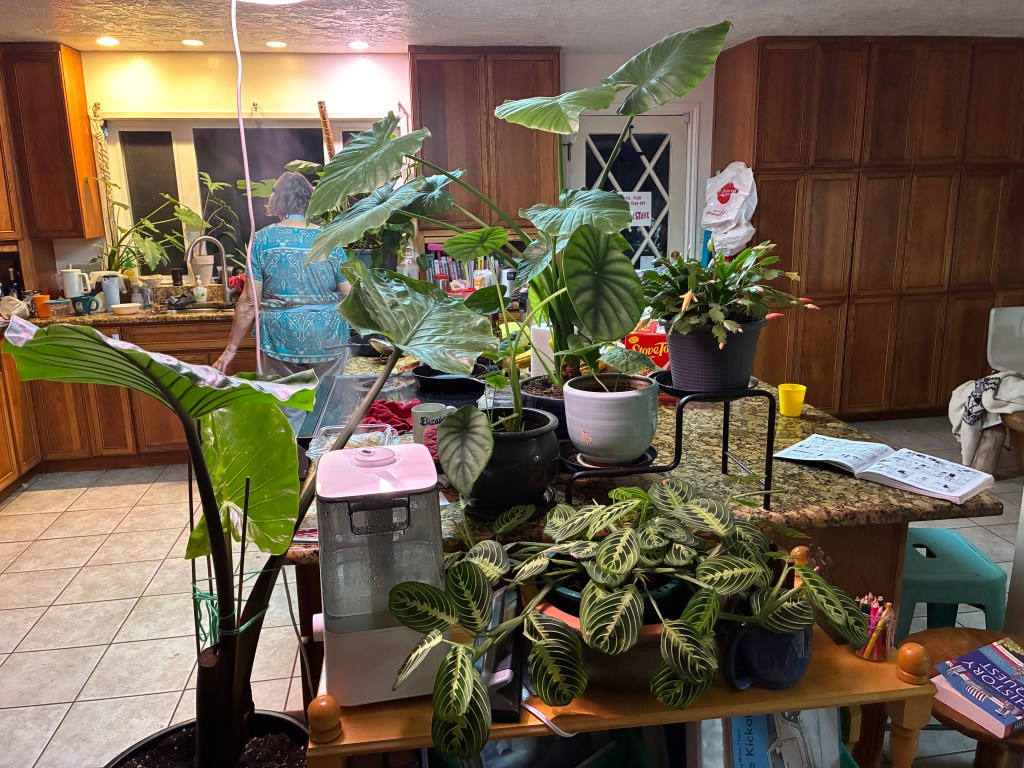
All is well until the plants can’t handle their fall locations and have to journey back to the living room.
Why can’t characters be happy? Maybe “satisfied” is the term I’m looking for? (Spoiler alert: happy and satisfied isn’t very exciting.) We see it most often tv shows or long form writing: we spend three seasons or books in a complex love triangle or vengeance arc and then finally get the climactic resolution; Jenny gets her guy; Jenny’s complicated mouse trap of a plan succeeds and her enemies are vanquished. But then what?
There are three options.
1. Interior tension disrupts the happy. Jenny sabotages her relationship. She realizes vengeance isn’t what she needed after all. The sacrifices are just too much.
2. Exterior tension. It’s Jenny and her man—Phil? Chuck!—against the world (probably the landlord first, then a slow build up to the world). Jenny’s mortal enemy’s allies are now after her and she has to run.
3. Stagnation. We just watch Jenny be happy. Stagnation isn’t worth reading for 300 pages.
Can a character be satisfied and yet the story stays readable? Conflict makes life interesting. In story building, the first thing we do is figure out what a character wants. Then we figure out how to keep them from reaching that goal until we have sufficiently tortured them—and our readers—through a proper and satisfying growth arc.
I think the answer is in pivoting. If Jenny and Chuck are going to stay together on the page, there needs to be tension outside their relationship that is as interesting as watching them stumble toward each other in the first place. (Huge caveat here. You get one each of putting J and C in physical danger, or moral danger, and you may not have either of those things easily resolvable by a quick, honest conversation. No.) Natural disasters, conniving co-workers, a sudden horrifying realization that they have married the wrong person but have to keep up appearances to gain his inheritance, or the discovery that Chuck has terrible body odor are all legit new conflicts to mine.
Vengeance is easier than love to pivot from because it is less morally satisfying and has plenty of offshoot growth arcs, but regardless, Jenny can feel as if she has laid her trauma over the death of her pet hamster to rest now that the burglars who broke in and accidentally stepped on him are dead as well only to discover that she gets great satisfaction from vigilanteism.
I have two tactics that I use frequently to stir up conflict post resolution. First, like Jenny and her vengeance, my characters get what they want only to find that things are more complex than they thought. Second, I move them from their comfortable world to one that has different requirements and suddenly they need to grow all over again. Again, it boils down to interior and exterior tension.
Instead of an exercise I have a little writing prompt for you this week: Jot down some instances where you got something you wanted but it didn’t turn out like you hoped.

 Mamasquatch the Writer
Leave a comment