
In my writing life I am nearing the end of book three in a series. On a Joseph Campbell diagram, this novel sits squarely on the “First Epic Fail” line (I’m paraphrasing). For months I have walked the narrative tightrope of having my protagonist fail over and over again. I’m trying to avoid one of my biggest pet peeves when it comes to super-long form writing: plot recycling due to lack of character development.
Characters need flaws. Flaws=relatability. Flaws allow for a satisfying emotional arc. Flaws keep the exterior tension out of the realm of absurd. Even in plot centric, or short form work characters have something detrimental about their behaviors or mindsets.
I get it! When a writer is ten books into a series, there are only so many interior growth arcs left. Detective Helen Snoopsalot has learned her lesson, been through rehab, gotten out of a couple bad relationships, and learned to work well with others; what’s a girl got left to overcome?
One option is to create a layered flaw. Maybe Helen hasn’t actually learned her lesson but has only dealt with the symptoms of the problem. The drinking and compulsive nail polish purchases are actually related to some buried trauma that can pop up again in new ways. The brain unlocks things as it is able to handle them, so it makes sense that as a character becomes healthier, deeper layers of their flaws can come to light.
I am currently playing with another idea. Because in this book my protagonist has just Passed the Threshold, she is finding that the rules of the bigger world work differently than the life she left behind. What might not have been considered flaws in the community she was part of for the first two books—or because of her standing were overlooked or mitigated—now are having consequences without a safety net.
This also works well for those of us writing series that span a great swath of time, or that allows for the characters to come in contact with a variety of cultures. It’s a take on the fish out of water theme which has the added bonus of giving the writer the option to have the character learn to conform without changing their root behaviors. In the character’s mind it is the culture that should change and not them without realizing that the two are not mutually exclusive.
There are plenty of standard plotting options for long term character development:
-Have the character fall in love
-Revenge arc
-brain injuries/amnesia
-die and come back a ghost/vampire/different version of themselves
-external danger forces difficult choices
All of these are tried and true. Most of them work once. Could Detective Snoopsalot hold a series together with petty vengeance arcs? Sure. If she is developing her character in other ways. Perhaps she begins with wanton, spontaneous acts of nail polish based vandalism toward her targets but overtime becomes calculating and sly until her social life is eclipsed by the hours spent crafting the perfect plans. By book 3 or 4 she has learned to budget her time and gets into a relationship based on lies—I’m thinking the partner would have a serious moral objection to revenge, or current beauty product testing policies—and so on and so forth. But honestly? This is going to feel gimmicky sooner than later.
In general, if a character is not progressing internally they begin to feel stuck. I personally get frustrated with the story because it feels like the character should have learned their lesson after the last time they got jealous, stomped off, and got kidnapped. Sure, this time their boyfriend gets kidnapped looking for them, and then its someone else in the party who gets killed which makes the character feel ashamed for awhile, but the next book there they go stomping off again.
I get it. There is so much to take into account when writing a series. Historical Fiction is even more convoluted because of the details. Most of my first draft of Book #3 has been me trying to wrap up this part of the series, seed the upcoming characters and plots, and take into account everyone’s motivations to keep things consistent. Flaws are often the furthest thing from my mind.
And yet. Flawed characters are the most fun to write. I have two boring characters write now and you better believe I am going to spice them up with some impulsive violent tendencies and fear of intimacy. Over time, those flaws will have to change, grow, be mitigated, or embraced. The nice thing about a series is that we have a long time play with our characters before they reach self-actualization. Or die.
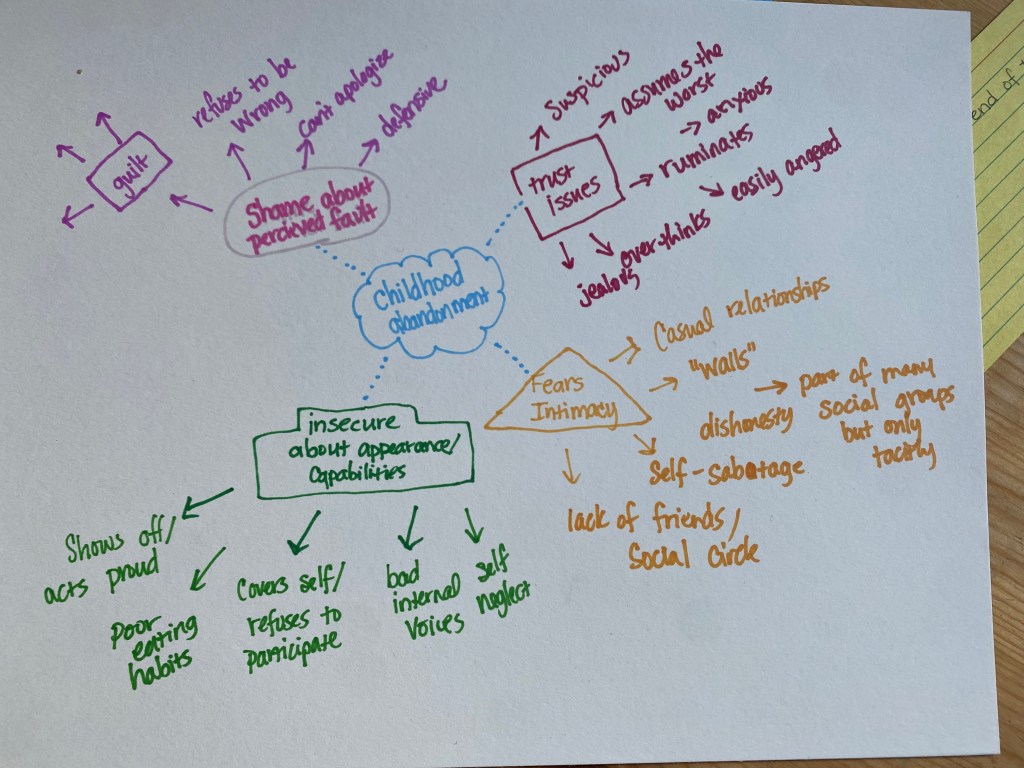
Writing Activity: make a flow chart of a trauma, symptoms, and flaws that could result. Use markers! Have fun!

 Mamasquatch the Writer
Leave a comment