During my delightfully calm week this week I was able to release my brain to a real hyperfocus! I spent hours doing some cursory research for the fourth novel in my series which I hope to start writing next year.
The book spans the American Revolutionary War and ties up the character arcs of the first three books while laying out the plot foundations for the next several. I tend to have one book in workshop, one I’m currently writing, and one in research. This allows me to “seed” the books with characters and plot berries for the future, and helps me from writing myself into a corner.
Since I am solidly 2/3rds of the way through my current book, it was time to start looking forward to the next one. Now. As a history nerd, I have a fairly solid grasp on the what’s and why’s of the Revolutionary War, and have visited quite a few battle sites and key locations, but I also don’t want this to be a “men’s war” story. The trick has been to do broad stroke research on the various military campaigns and look for vines that connect my previously embedded plot berries with the stories I want to tell going forward.
So how did I fare? I wouldn’t say I have vines yet, but I did discover some interesting tidbits.
-The British military presence in America was small. Peacetime forces in America were about 6,000 men, and there were only seven garrisons spread from Montreal to St. Augustine and a handful of smaller posts in habitable condition in 1774.
-The British require a “Council of War” made up of several high ranking officers who make decisions. They didn’t always agree or have the same goals in mind.
-The British navy didn’t initially feel it was at war with the colonies. Vice Admiral. Samuel Graves was an interesting fellow.
-Dr. Joseph Warren (of Smallpox research fame) sent William Dawes and Paul Revere to warn of the British approach before Lexington and Concord. He was later killed at the battle of Breed’s Hill during a retreat. (Since Smallpox is one of the few vines I have already worked into my plot this is surely important.)
-In the American Militias, Soldiers wouldn’t serve with men from other towns. (This needs more research to verify)
-Benedict Arnold seems to be Washington’s best general? With Ethan Allen he saves the early campaigns, then does his best on the dismal Northern Campaign to try and make Canada the 14th colony.
-Arnold joins another force in Canada—attempting to take Quebec—by trekking up through Maine. Weather, shoddy boats, and lack of supplies mean that only 600 or so arrive. After they are routed in battle, fail at their attempted siege, and harried back southward, only 200 or so make it back to the safety of the rest of the army. They eat lip salve and leather to survive.
-The Howe brothers take over the British Army and Navy; both are set on reunification rather than smash and loot. Gen. Howe spends a lot of time chasing around his mistress.
-Privateers are messing with things hard and the British are afraid of losing the West Indies.
-in 1777 Gen. Burgoyne of the British cuts camp followers in his Army from six per company to three. It doesn’t go over well and desertions are high.
-Jane McCrea Scandal: Indigenous mercenaries for the British come to camp with the scalp of a Jr. Officer’s fiancee and Burgy does nothing but lightly scold them for the murder. Becomes a huge PR nightmare for the British; American army balloons with outraged volunteers.
-The Smallpox is bad at Valley Forge, but Washington starts ordering mandatory variolation.
-By 1778 the Northern Campaign is largely over. The British Army in Philadelphia is sent south to protect interests in the West Indies and Florida.
So that is as far as I have gotten thus far. I am using Campaigns of the American Revolution: An Atlas of Manuscript Maps by Douglas W. Marshall & Howard H. Peckham as my initial read. I will be doing more research on Jane McCrea, as well as the camp followers. Gen. Howe is going to feature briefly, and Benedict Arnold just keeps popping up, so we’ll see!
This is my favorite stage of research (in the way that all my kids are my favorite). I love when something jumps off the page at me and I know immediately how to make it fit into my story; I love it when something jumps off the page and I have no idea how it might fit. I also love when I have three or four pages of general, seemingly unimportant, notes and something starts slowly shaping into an idea.
I can’t always write. This week I was in crowded spaces, or just had half an hour. It was lovely to pull my giant book and a notepad out of my basket and spend those minutes on an easy brain task. I also expect that next week will be the same Hyperfocus. Today I sat on the floor and pulled out relevant books from my research shelf. I have a stack of about eight to flip through and two for deep diving.
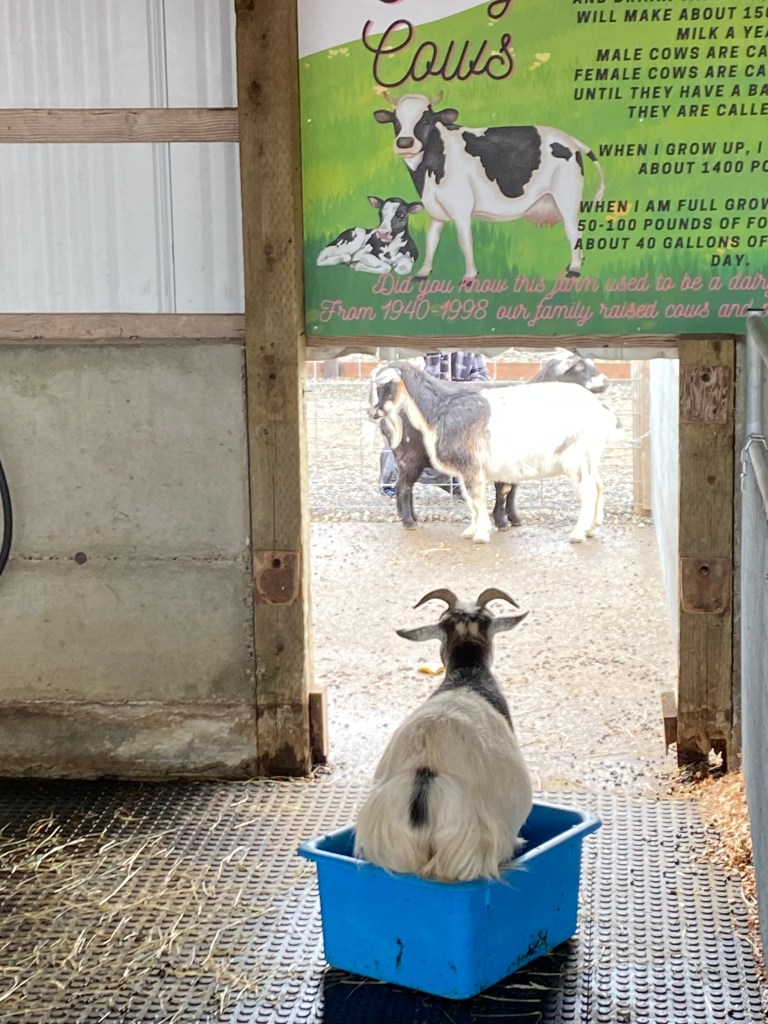
Until then, have a great week and enjoy the totally non-related pictures of our pumpkin patch adventure.


 Mamasquatch the Writer
Leave a comment