On my first day in Lisbon I was pickpocketed, slid down a cobblestone hill with a baby strapped to my chest, and walked back and forth around the city to the various police stations while trying to get Pepper through a passport nightmare, in 100 degree heat. At the end of the day my professor asked how I was doing and I replied with “someday this is going to make a great short story.” It was the mantra I had been repeating as I trudged up and down the hills. Honestly? I was right. I get a lot of traction out of the tale.
Journey narratives are one of my favorite forms of story. Partly—I’m sure—because I have a constant dialogue running in my head where I am the heroine of my own personal journey narrative, but also because there is a comforting magic in the leaving, growing, and coming back again to see something familiar with new eyes.
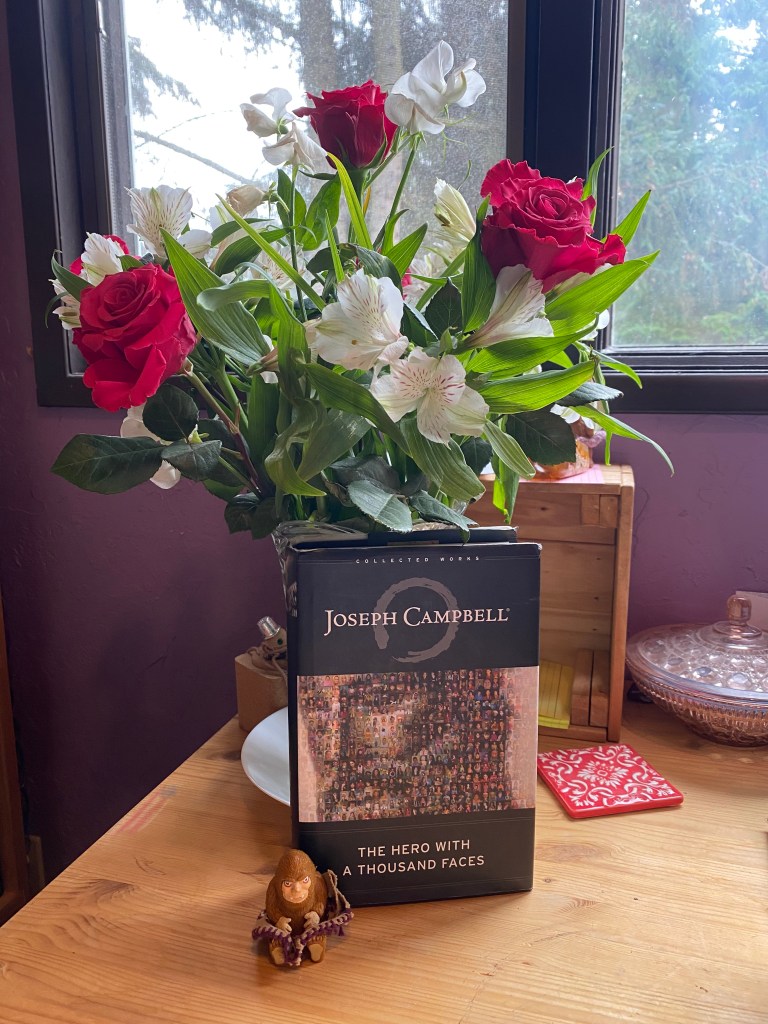
Joseph Campbell wrote The Hero with a Thousand Faces, considered the preeminent text on the subject of journey narratives, and a surprisingly easy read. Highly recommend. Campbell breaks down the Hero Journey into the following steps:
1. The Call to Adventure: Our hero realizes a need to step out of their comfort zone. This often starts with a glimpse of the everyday world; think Frodo at the party in the Shire and then the discovery that the ring of power is bringing danger to the doorstep.
2. Refusal of the Call: This might be a huge “nope” from the hero, or simply a pause to consider the consequences. Frodo tries to send the ring off with Gandalf who is smart enough to refuse the offer of power himself.
3. Supernatural Aid: For the kids we call this “meeting the guide”; at some point a person or object helps the hero begin their journey. Again, in our Frodo example, this is Gandalf.
4. The Crossing of the First Threshold: We leave the comfort of home and take the first step into the scary world. Frodo and the Prancing Pony; my character leaving Boston for Philadelphia.
5. The Belly of the Whale: The old hero dies through emotional trial, so the new might be reborn. I would call this “the first failure”. We see the hero is not bulletproof; we see the need for growth. In Frodo’s case we see the need for a whole party of allies.
6.The Road of Trials: This is the meat of the story, the second act, the body of the adventure. Frodo takes most of three books to get through his trials.
There are a few more steps before our Hero succeeds and begins the road home, but you get the idea.
Campbell wrote his book about mythology specifically, but most Journey narratives follow a similar path, give or take a few encounters with Goddesses and women temptresses. Although Galadriel…
Journey narratives are my hyper focus of the week for a couple reasons. First, the kids are studying the topic all year in Language Arts, so we are going step by step this week to introduce the elements of story; second, I sat down with my current book and did a motivation check on all my characters which led me to realize that my main character is on the cusp of Leaving the Familiar World and I have some editing to do.
It’s a busy week what with my birthday and fall activities ramping up so it was nice to focus on something familiar and fun for a few days.
 Mamasquatch the Writer
Leave a comment