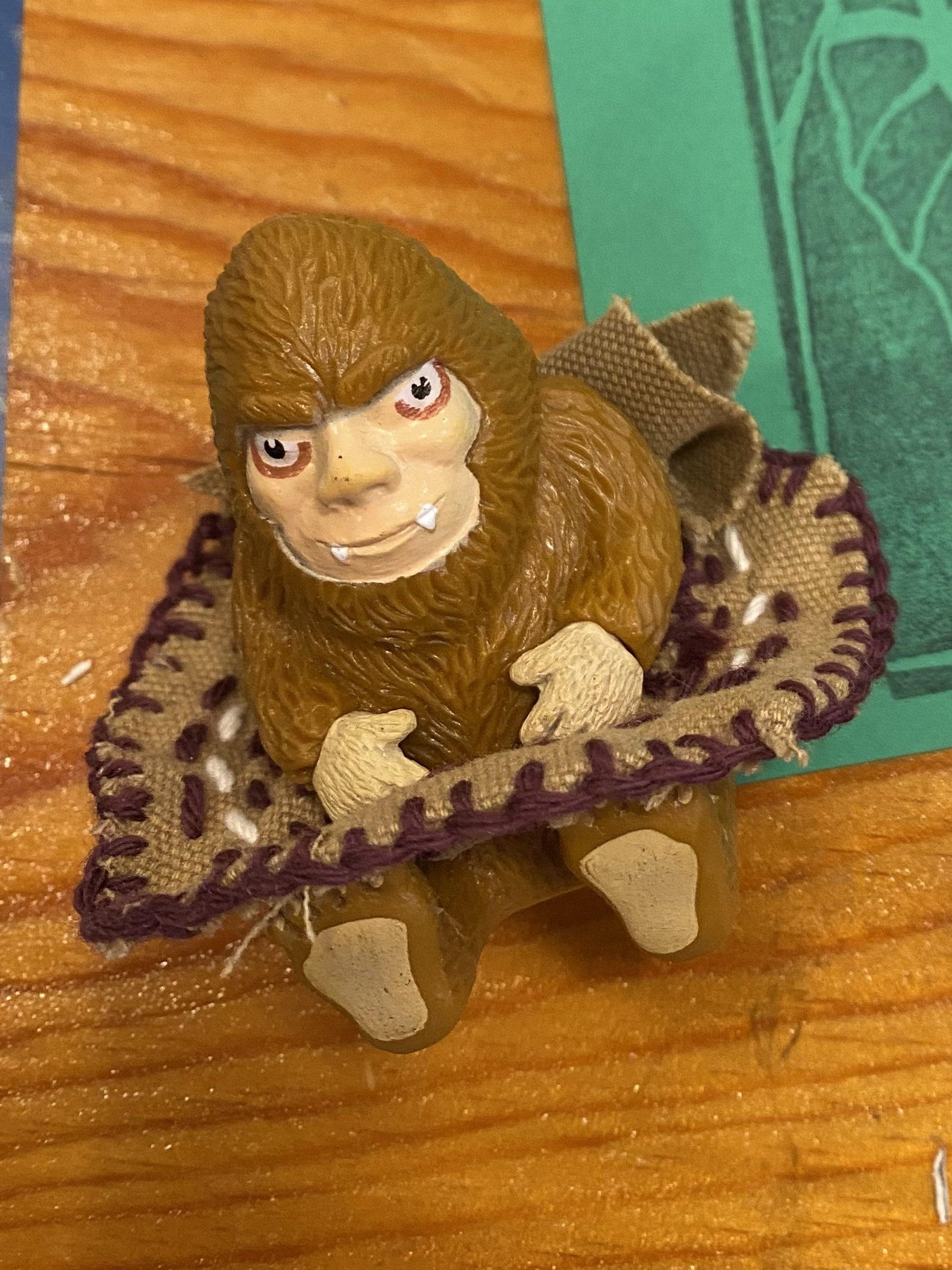
Mamasquatch the mascot in her new skirt; sashiko and blanket stitch on work pant scrap.
My friend Sarah has a beautiful bag. Sarah is a quilter and the bag is worked in brightly colored patchwork, but the best part is the top stitching. Instead of being quilted with swirls or flourishes, there are neat rows of straight stitches done in embroidery floss. The whole look is stunning. When I asked her about the project she cheerfully replied “Sashiko! It’s so neat!”
Sashiko is a Japanese mending technique that uses thick thread to quilt (sew layers of fabric together) using straight stitches together in repetitive patterns. The end result is a repaired garment or fabric item, less landfill waste, and a delightful time had by all.
My first attempt at Sashiko was a printed kit that I bought at Northwest Yarns & Mercantile in Bellingham, WA. Sarah had returned some books on historical clothing I had loaned her in a lovely recycled gray fabric grocery bag, which was just screaming to be the base of my project. I used embroidery floss pilfered from my stash and the whole thing came together on the car ride to Sea-tac, then a plane ride to Mexico.
I love the result!
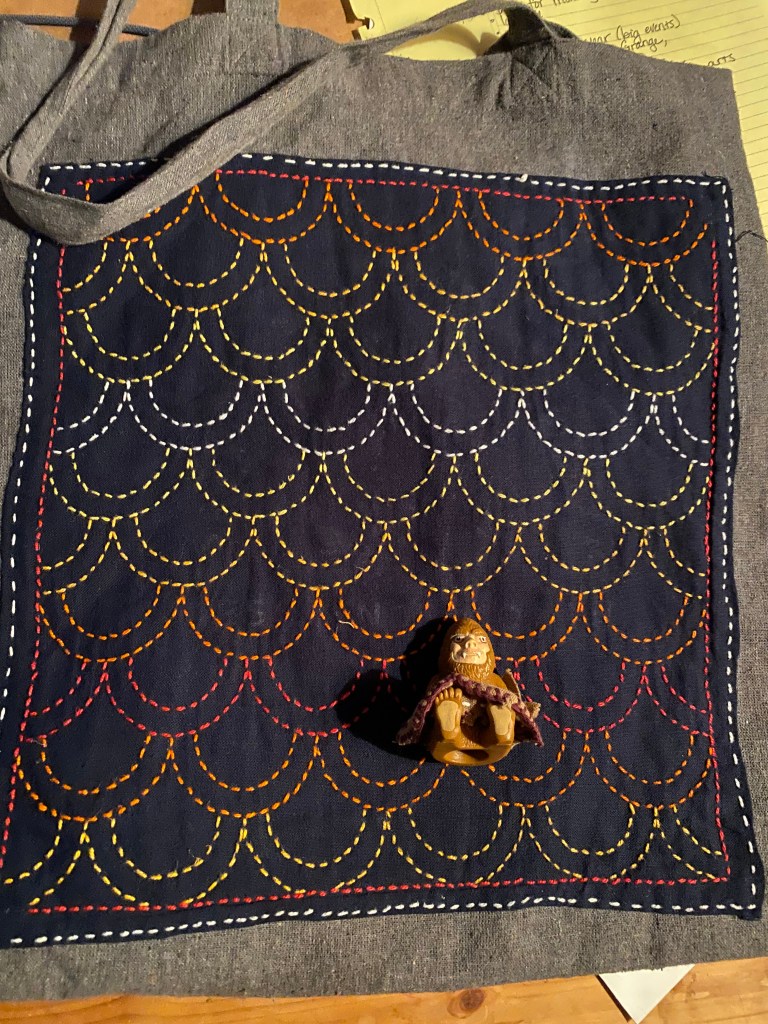
* note: If you are used to historical garment construction, it can be difficult to switch over to this stitch length. Marking your fabric or using a kit to get into the swing of things can help to keep things even.
This week I jumped into my second project.
Working forty hours a week up at Holden Village was probably my true Hyperfocus this week, but in my few hours of downtime I eased my mind in the Craftcave. There is a sewing room, and a loom room, which both produce scraps that are tossed in “free” bins for people to use as they like. I dug through the fabric scraps first until I had a pile of bits and bobs that spoke to me.
Tan canvas from a pair of old work pants, red plaid from the sleeve of a flannel shirt, creamy green from a cast off kitchen apron, and a blue corduroy overall strap. I grabbed some denim for a base layer.
I found my thread in a tangle of loom warping. Think of the strings that get woven around. It is similar to embroidery thread but with a tighter spin that can’t be pulled apart easily. I used a tapestry needle rather than a traditional sashiko needle.
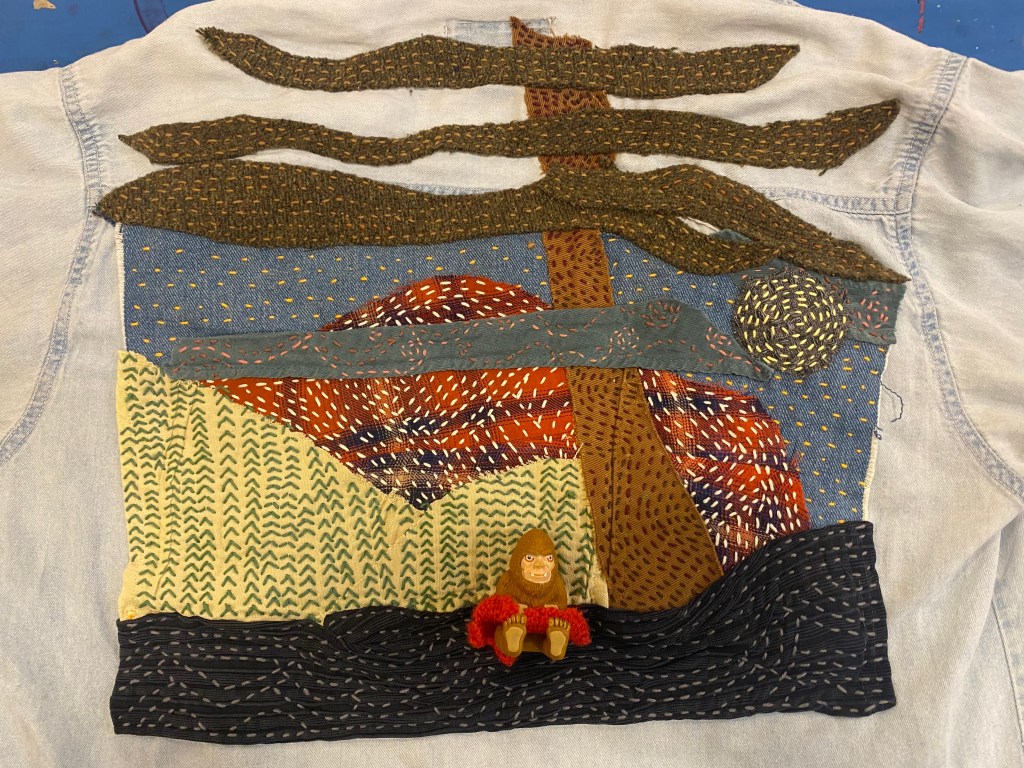
** Note: This was all free hand which is why the trees aren’t neat and even. Marking my stitches would have helped here.
Long story short, here was the result, which ended up bigger and on the back of a shirt I found in a crate of give-aways. All the materials were free and salvaged.
There are plenty of wonderful resources on Sashiko out in the real world and I hope you all take some time to try this hobby? art form? lifestyle? out. It is incredibly accessible from a materials and skill standpoint, comes together quickly, and can be as simple or intricate as you like. Highly Recommend!
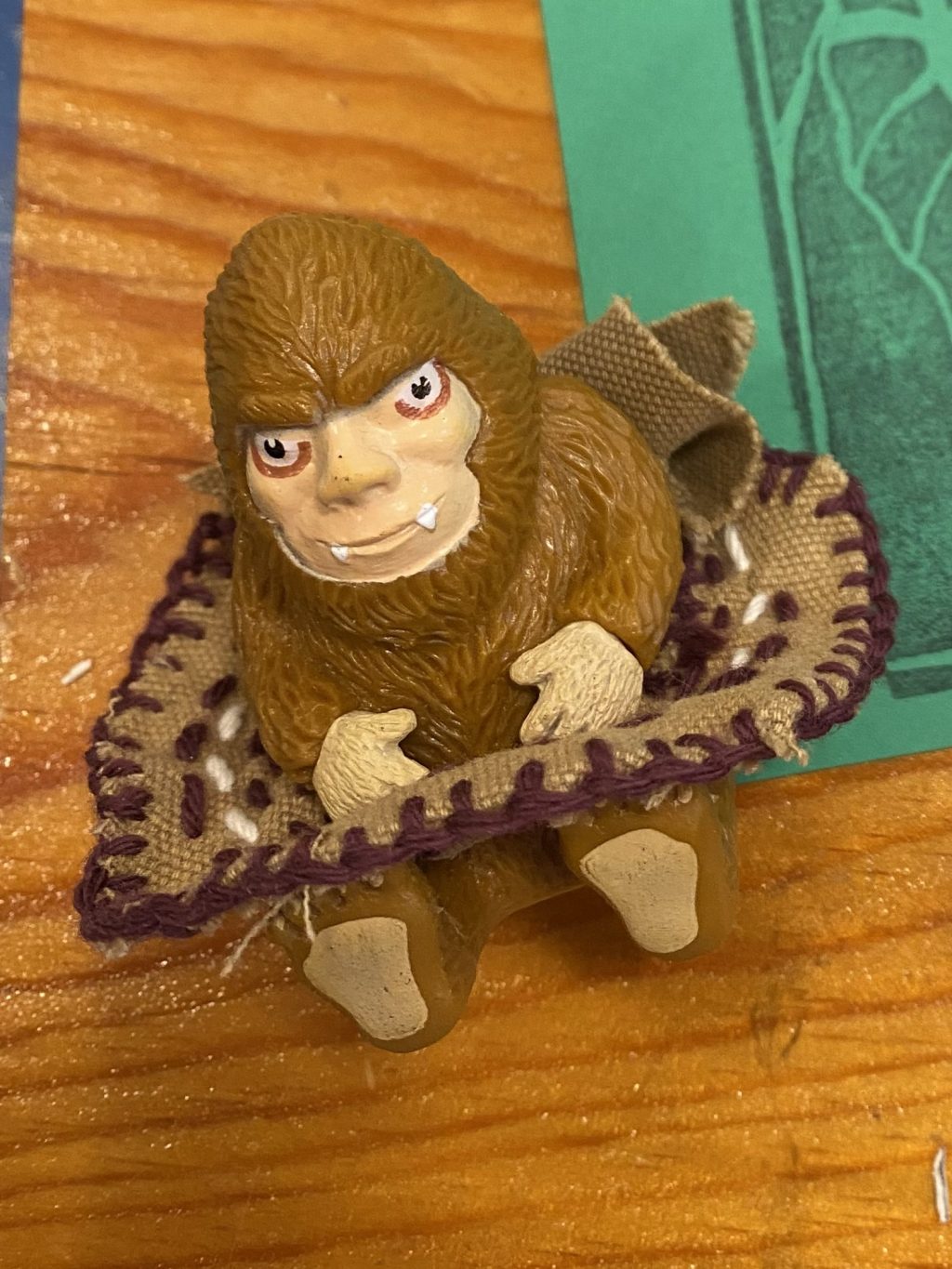

 Mamasquatch the Writer
Leave a comment