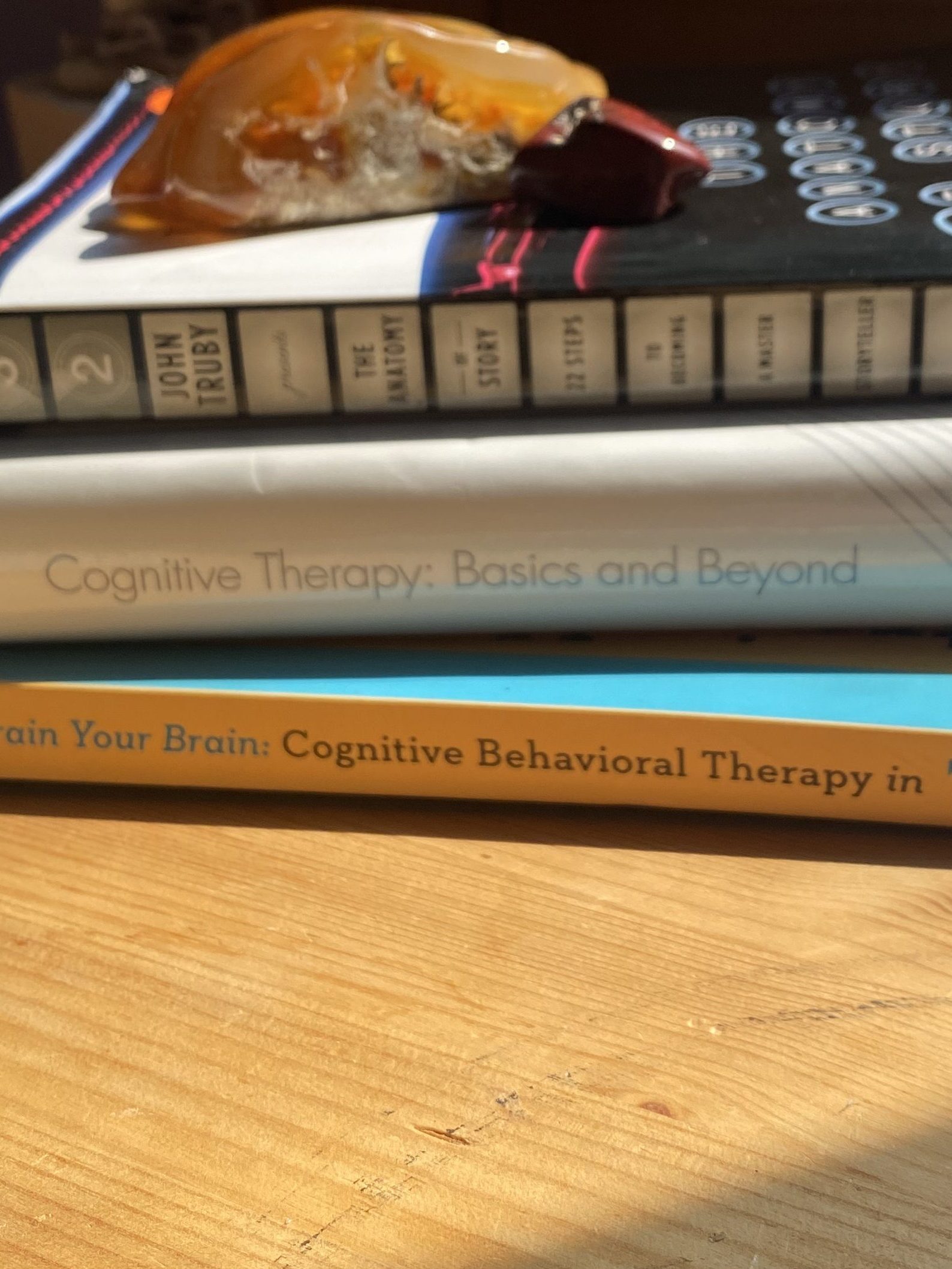
Schema is an important sounding word. Throw it around at parties with a self-satisfied glint in your eye and you will definitely attract a certain type of person. Really though, a schema is just an internalized idea that shapes a person’s behavior. Often found as If/Then statements (according to the Great Courses Plus series on Cognitive Behavioral Therapy I was listening to while putting my new 50 trees of the World jigsaw puzzle together this morning) an example might be: If I am better at a task than everyone else then I will be valued. Compound this with: If I am valued, I won’t be cast out of the group, or If I am valued, I am worthy, and you start to see how someone who runs on these Schemata might have a competitive streak.
If a person believes “Just by existing, I am worthy” they may be less likely to bean you in the head with a dodgeball, but depending what schema that schema is paired with, can swing them from Mother Theresa to Insert name of any dictator in history
So how does this translate to writing? Well, our last Character Psych episode was about Big Hurts, so if you skipped that one maybe breeze through real quick, but essentially, A character’s Big Hurt is a psychological wound that shapes their beliefs about the world—and their Schemata—which dictate behavior.
If you are struggling with a character behaving in a cohesive way, or you don’t know where they are going on the page, my suggestion is to jot down a quick psych profile including Big Hurt, A few Schemata, and how those might affect actions.
Jane M.
Big Hurt: Grew up in a restrictive emotional household where showing feelings was actively ridiculed. Father left when she was 10 stating “I am drowning in female hysteria”.
Schemata: “If I show feelings, I will drive people away”
“If I have feelings, I am weak and mentally ill”
“If I am weak or mentally ill, I don’t deserve love”
“If men feel overwhelmed, they are allowed to leave”
You can see how each one of these schema could spiral into more and more problematic thinking trains. This doesn’t mean that Jane M. is out on a street corner shouting these ideas as facts, but they will show up in her behavior on the page. Maybe she seeks relationships with emotionally unavailable men, or only has casual hookups. Maybe she discounts her friends if they reach out for normal levels of emotional support. She absolutely is feeling physical and mental effects of repressing all emotions and probably has some sort of self-medication plan through substance abuse or adrenaline.
My Overthinkings is called so for a reason: I love this sort of deep dive into a character. While some of my methods seem over the top even to me (it’s my process!) This little exercise pays off in the long run for two reasons.
1. You will have cohesive characters on the page, even if you don’t explicitly detail out their trauma. Especially for antagonists or minor characters that have minimal on-page interaction, understanding what is driving their behavior helps to prevent them from feeling “convenient”.
2. It is very difficult to write a character outside of our own experiences. If however, we create an emotional and psychological blueprint for that character, then it is easier in the moment to stick to that vs. trying to guess what their reaction might be to the plot on the page. The nice thing about trauma is that the reactions are predictable enough to be written up in journals and studies. Are there deviations? Sure. But you have a strong starting place to draw from.
Over the next month, I will be hijacking my own blog for some homeschool content, but when the Character Psychologist series comes back, we will start examining specific conditions and how they might manifest on the page and contribute to character makeup.
 Mamasquatch the Writer
Leave a comment