Wednesday Night:
The first time I sat down to a spinning wheel I told my friend Vivi (who was patiently teaching me the basics) “If I ever get this, it is going to be my thing.”
Sure enough, the next day on a better fit of a wheel everything came together and suddenly I was making yarn. It felt like someone had set a weighted blanket on my brain and all of my spaghetti thoughts were suddenly gone and all I was aware of was the fiber flowing between my fingers.
I came home from Holden Village where V and I had been on an art retreat and bought a spinning wheel.
It’s been a year since the retreat and admittedly I don’t spin every day. Except this week I have been cranking out yarn like Rumplestiltskin (total guess on the spelling there) because Vivi is coming for a visit and we are playing with natural fiber dyes this weekend.
We are working with protein fibers—mostly sheep wool turned into roving—instead of flax or cotton. Roving is the fibers all brushed out and rolled into long strands of wool that are then fed through a spinning wheel and onto a spool, twisted tightly into what is essentially thread. Once the spinner has two or more spools of thread they run them back thorough the spinning wheel the opposite way to “ply” the yarn.
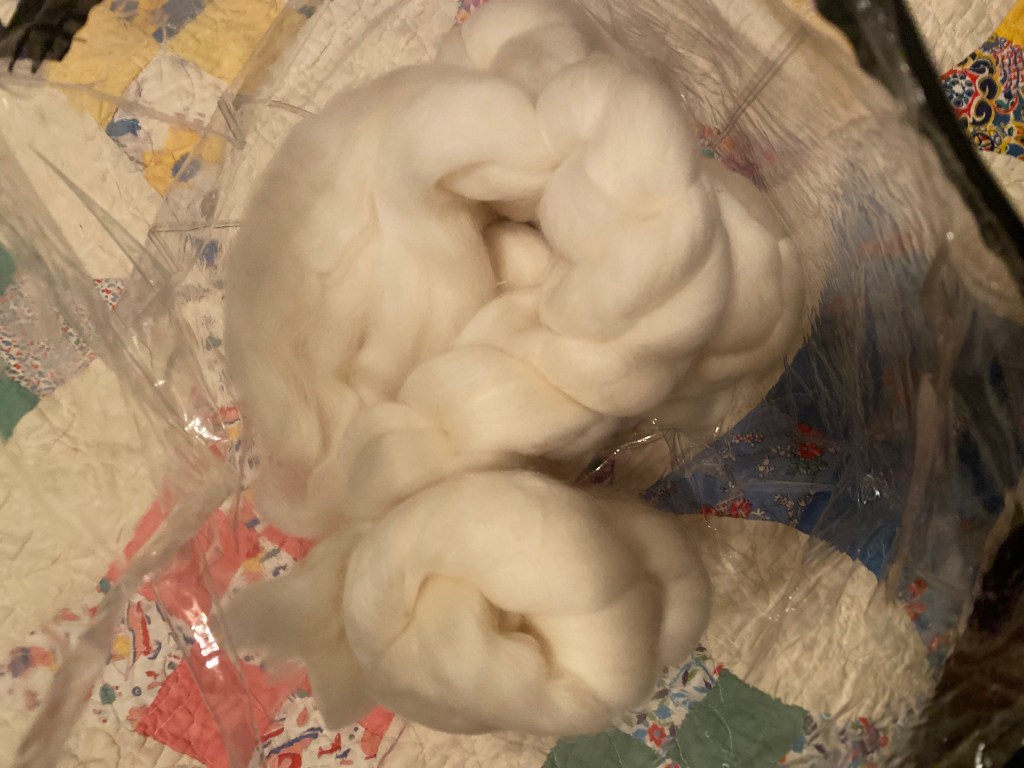
Once one has spun their yarn it needs to be washed in a light soapy water, rung out in the designated salad spinner (John generally grumbles at this point because my yarn spinner is much nicer than the one for lettuce) and hung to dry.
Next comes the mordant. Natural vegetable dyes don’t hold in fabric long without chemicals to help them set. These chemicals are readily available on Etsy, if you happen to live on a peninsula where such things are harder to find in stores. I snagged a tester pack of Alum, Ferrous Sulfate, Titanium Oxide, and Copper sulfate, each which will give the vegetable dyes a different hue.
The plan is to use madder root, beet root, and yellow onions to create a variety of dye pots to experiment with, but this is a two day project so we will see what we have time to do. Meanwhile, my fingers are tired and my feet are a bit sore from all the treadling. (If you are interested in long term medical issues associated with 19th century spinning as a career, the Mütter Museum in Philadelphia has an interesting display on the subject.)
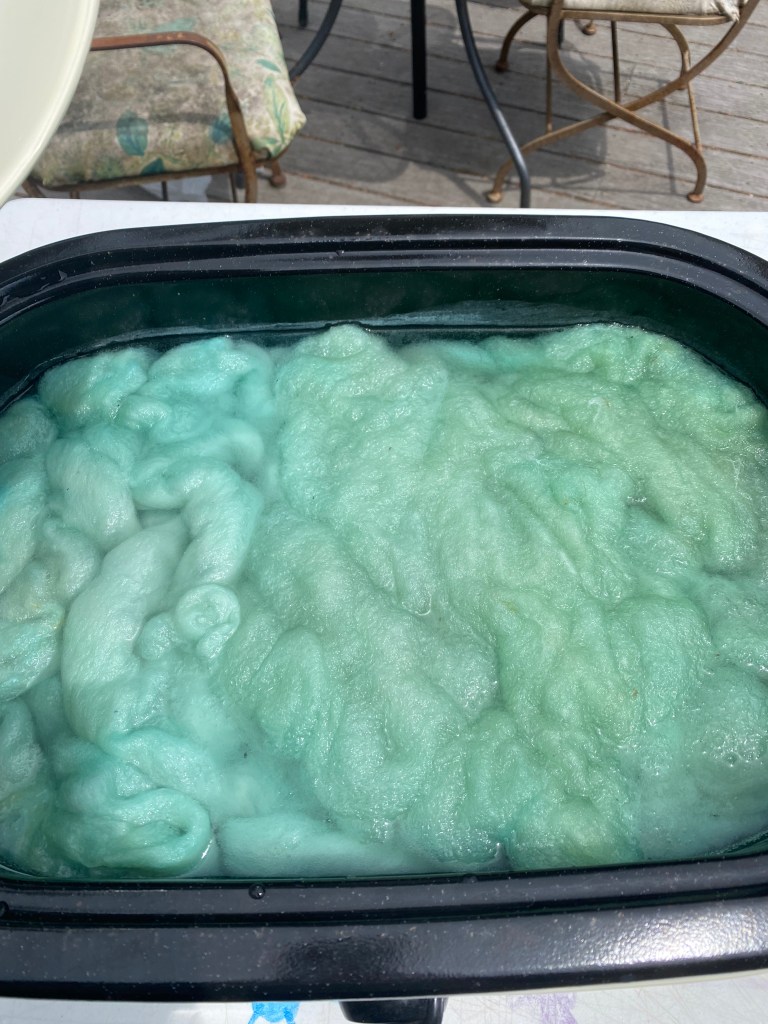
Roving with Copper Sulfate
Friday: Well that was a hoot. Vivi arrived last night and we were up scouring wool until midnight. Scouring involves washing the roving or yarn in soapy water, starting at room temp and letting the wool and bath heat up to about 180 F then soak for an hour before hanging up to dry to damp. We used Castile soap which seemed to work fine at stripping the wool of oil and smells.
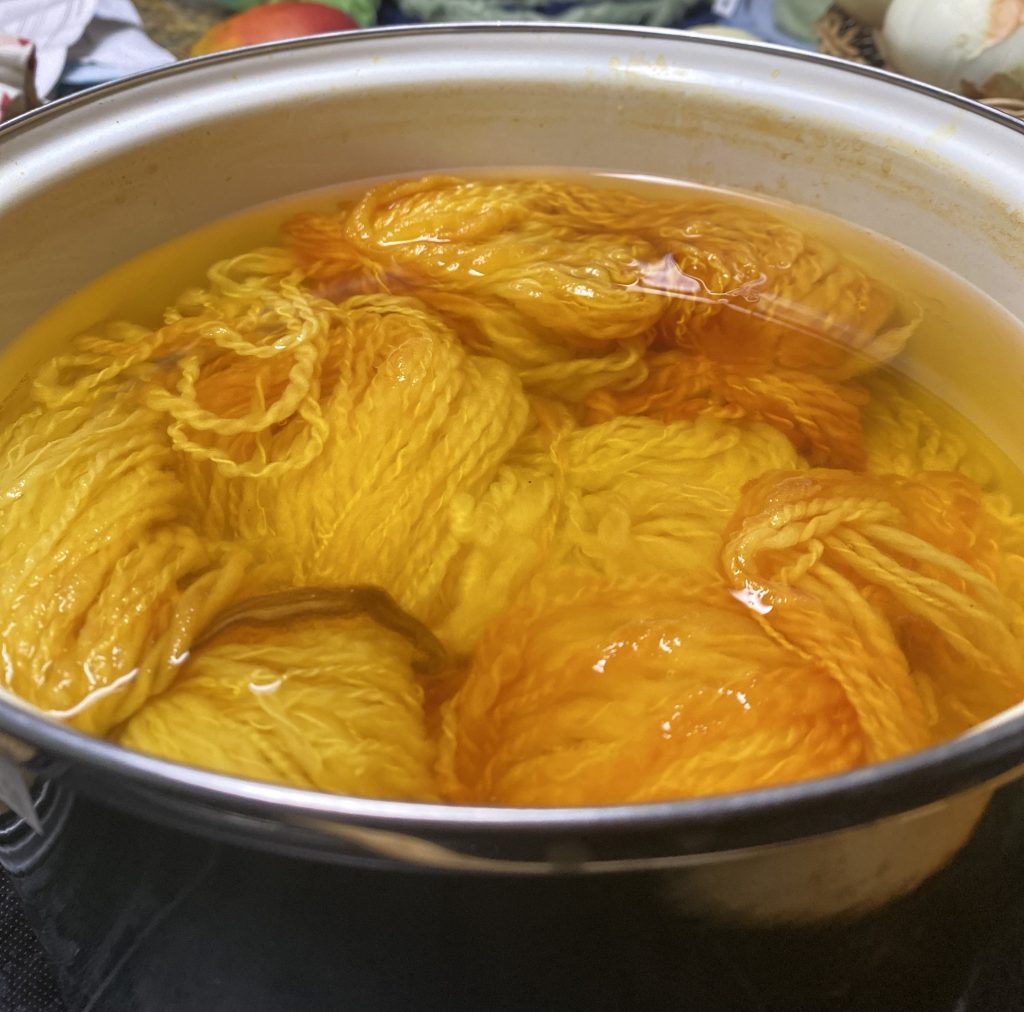
This morning, after a run to the local thrift store for another pot and some wooden spoons, we started the mordent baths. We used Alum on the fiber destined for the madder and onion pots and Copper sulfate on the wool we planned on using spirulina (a last minute buy at the grocery store after we nixed the beet root powder plan). Mordanting takes an hour or two per bath.
Even with three pots on the stove, and a roaster and pot on the induction burner outside (for the harsher chemicals) Vivi and I ended up carefully switching out mordant and dye pots to keep the process moving. The hardest part of the dying process was keeping the temperatures in range and making sure the wool was going from bath to bath without shock (a temperature change that can cause wool to felt).
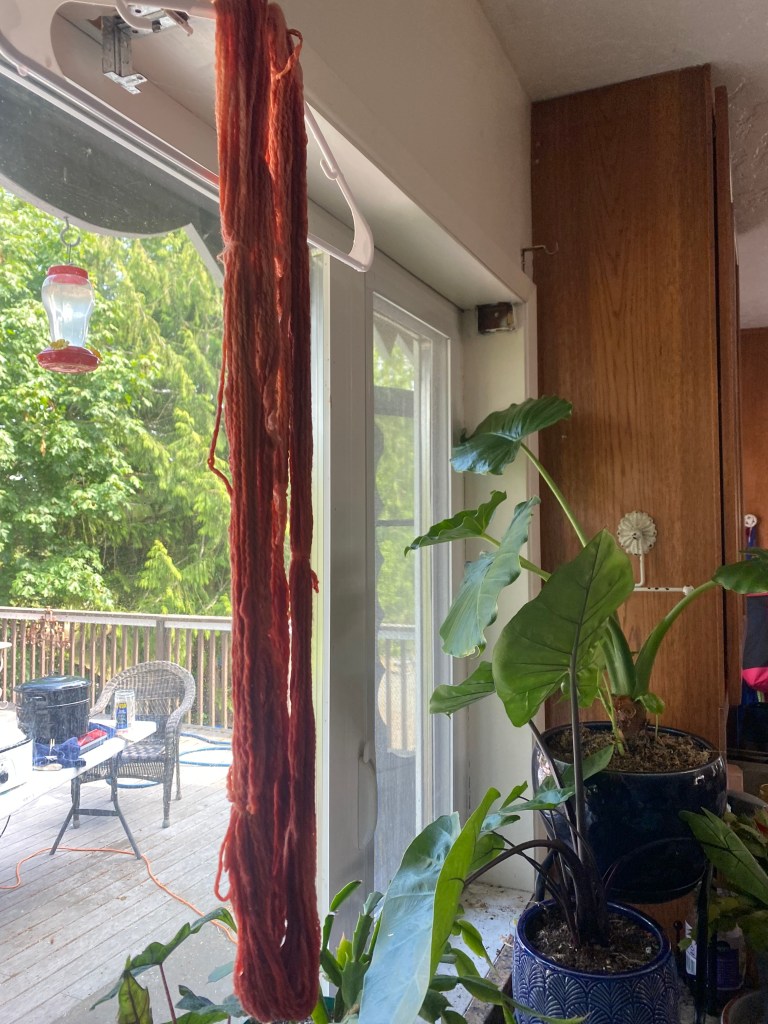
Matter root and alum
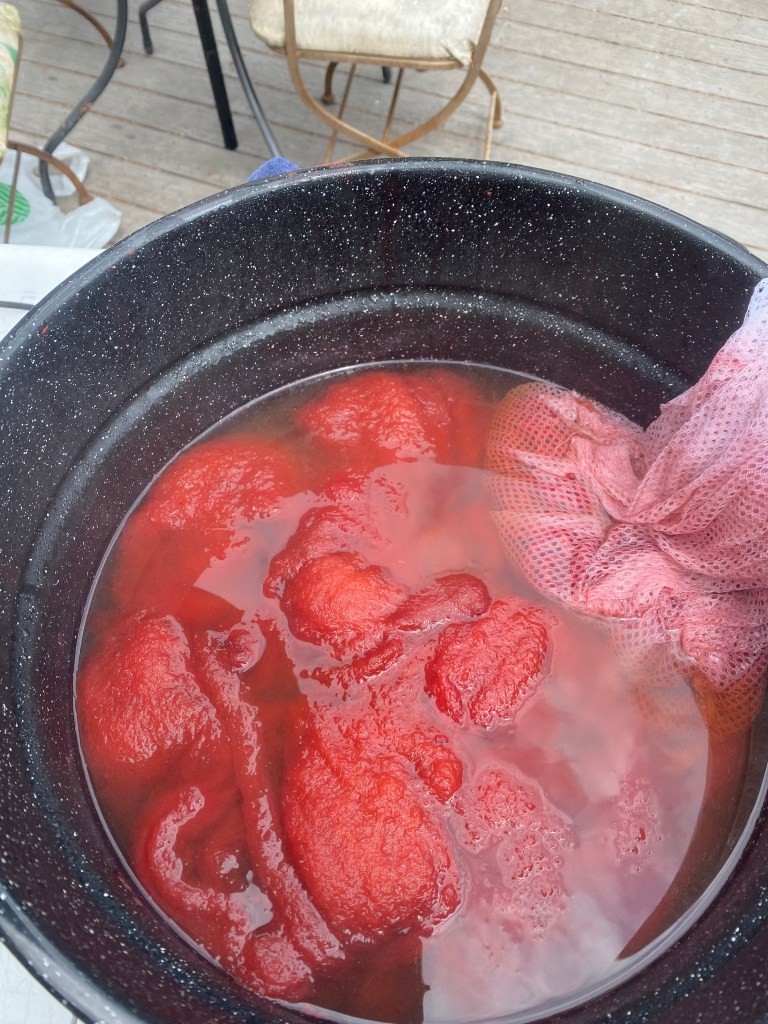
A few things we learned: The wool is actually pulling the dye from the water. The volume of the water changed very little, but it was much more clear the longer the wool processed. I hadn’t thought about the actual chemistry of the whole thing so it was neat to observe and make connections.
The wool needs room to breathe in the bath. We ended up with some inconsistencies (that look pretty cool) because we likely had too much roving in the pot at once.
We needed more tools than we thought we would.
After eight hours of work we ended up with amazing results and are excited to try different mordants, tannins, and natural dyes. We celebrated by heading down to the beach to look for magic dying sticks for next time. Happy Summer Solstice!
* * *
 Mamasquatch the Writer
Leave a comment